Inside the Consumer Fraud Network With a $4 Billion Advertising Ambition
Fake founders, fabricated Slack channels, deepfakes, hidden rebills, unauthorized charges, and reported hospitalizations. For nearly two years, I watched what I believe was a sophisticated fraud network use AI to scale - and ultimately expose itself.


Consumers shopping online have reported unauthorized subscriptions, non-existent customer service, stolen credit card information, and duplicate or knock-off products. They have also reported products that never arrived, failed refund requests, and health complications that have included hospitalizations and an alleged death from one of the Serene Herbs products. Meanwhile, advertisements featuring AI-generated medical professionals, synthetic testimonials, and potentially misleading product claims are making it increasingly difficult for consumers to distinguish legitimate businesses from deceptive marketing.
At first glance, these experiences may appear unrelated. Different brands, different products, and different websites. But what happens when some of these businesses share the same advertising agencies, marketing professionals, and methods of acquiring customers?
That’s what this investigation seeks to uncover.
After working extensively inside advertising operations associated with Wired2Scale and several consumer brands, I began examining similarities between practices I personally witnessed and complaints being reported publicly by consumers.
This investigation moves beyond my personal experiences to examine the advertising practices, business relationships, and consumer complaints associated with these operations. Through firsthand documentation, public records, and consumer accounts, it seeks to distinguish established facts from unresolved allegations and identify patterns that warrant further scrutiny.
The central question is simple: Are consumers experiencing isolated problems with individual brands, or are some of these complaints connected through a larger system of advertising and e-commerce operations?
If you believe you have experienced deceptive advertising, unauthorized charges, or other potentially fraudulent practices involving WIRED2SCALE or associated brands, you may file a report with the FTC. Provide truthful information based on your own experiences or available evidence. Filing a report does not guarantee an investigation.
Section 01What Consumers Are Reporting
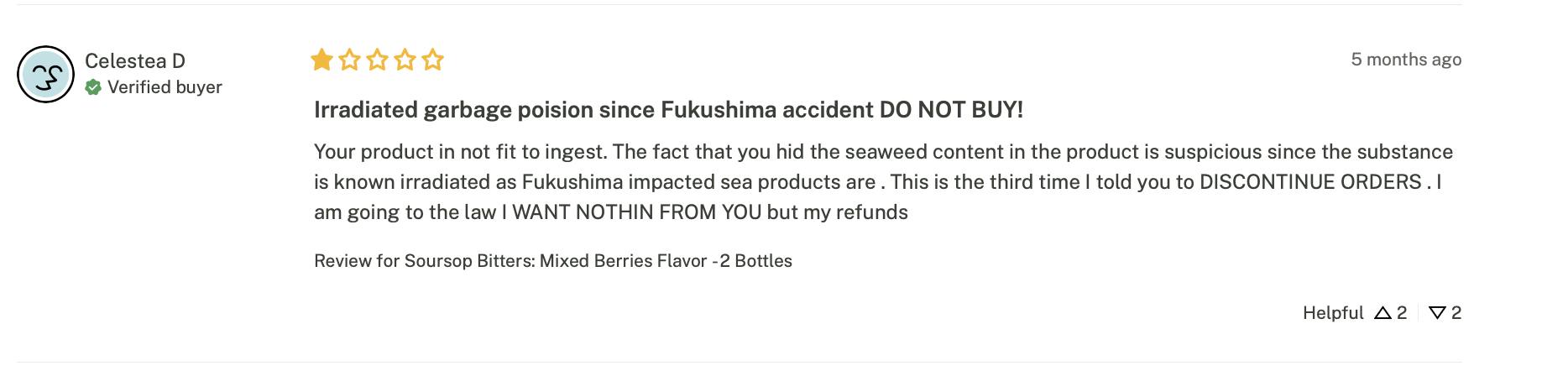
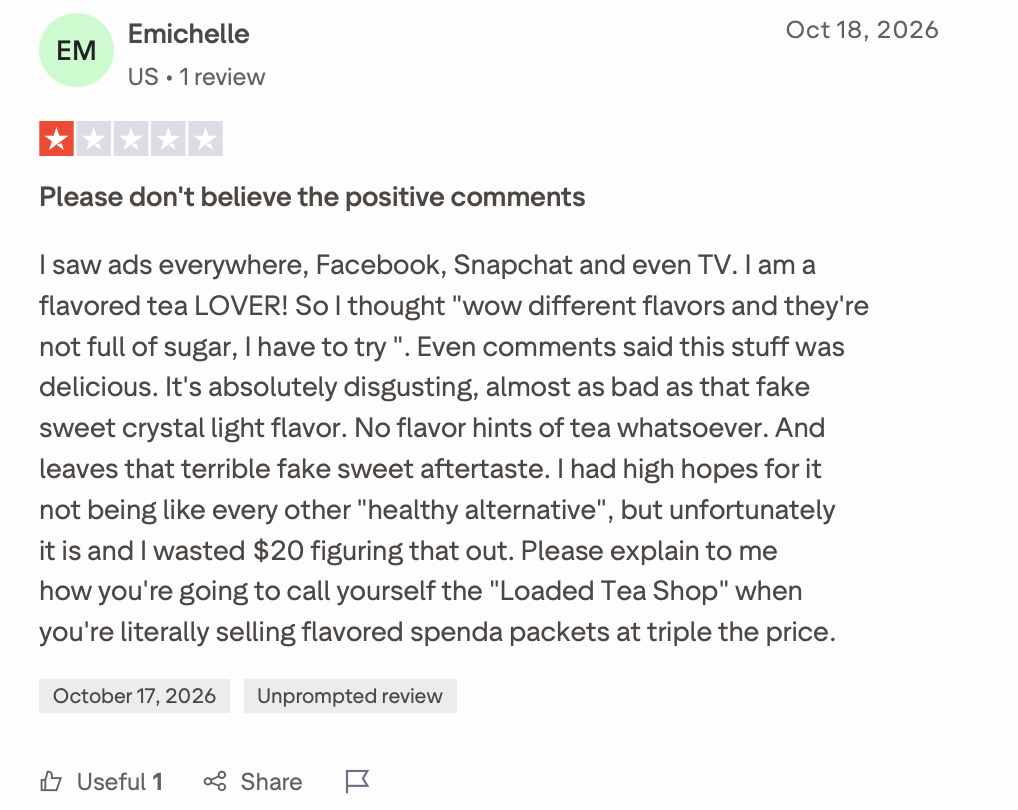
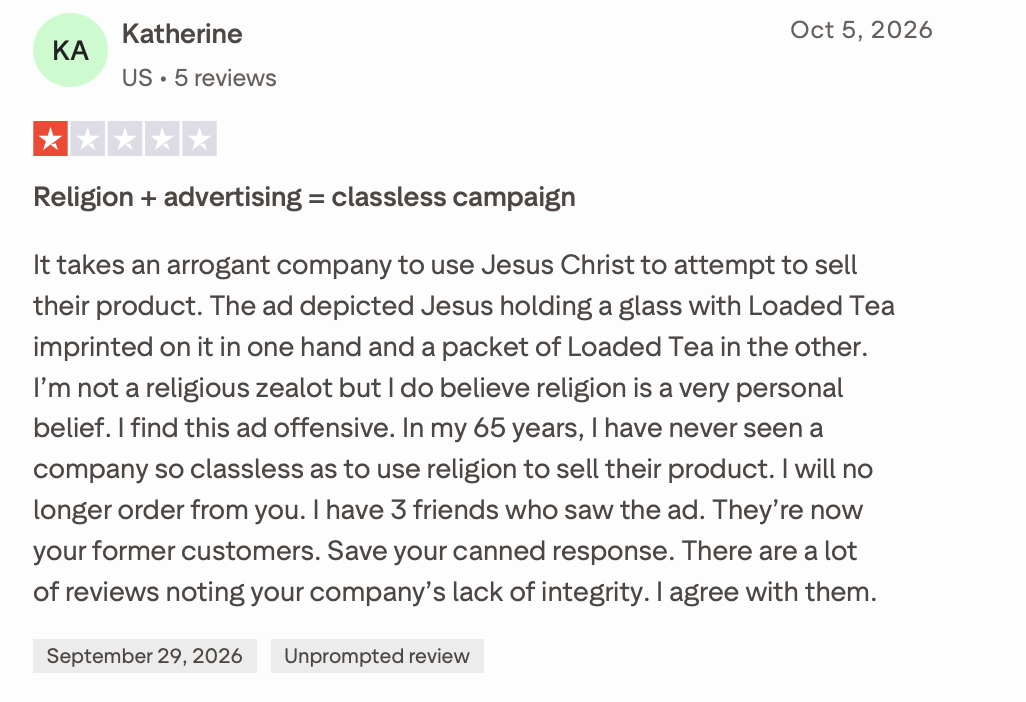
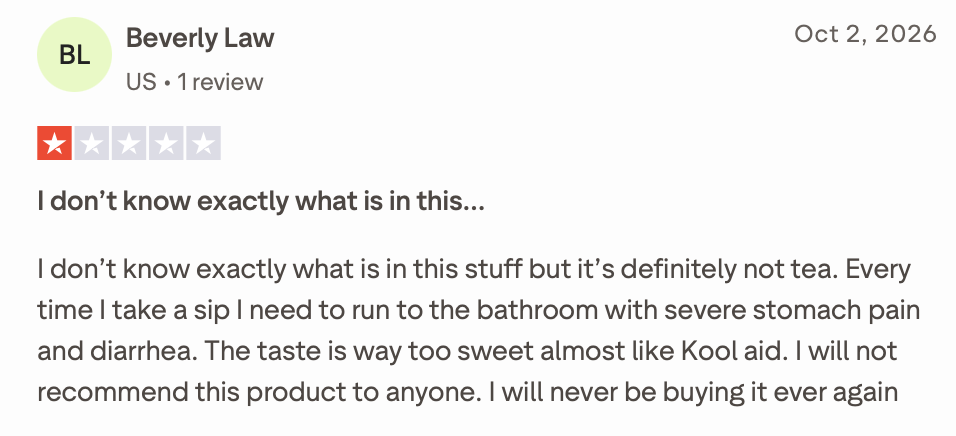
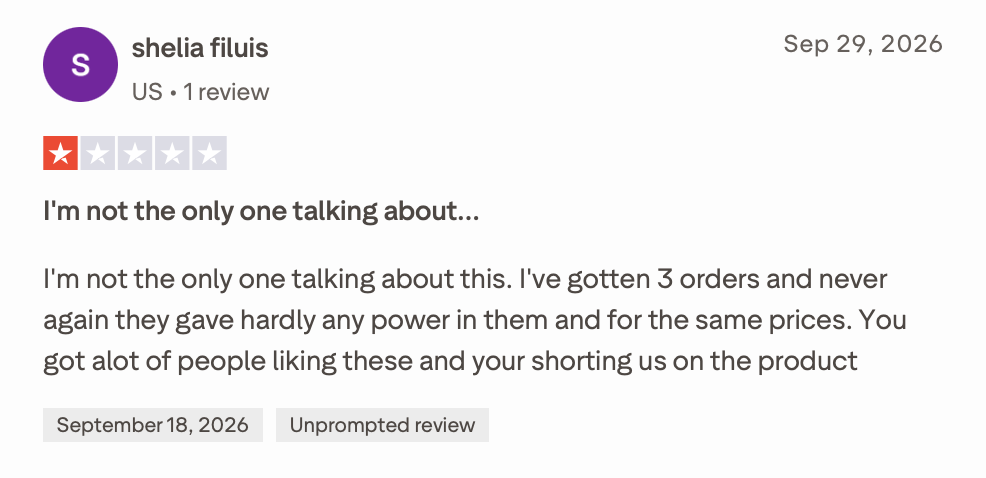
The consumers come first, because this investigation is about them. What follows are the problems people report across brands connected to the advertising operations I examined, organized by the type of harm. Unless a caption says otherwise, these are consumer allegations and public reviews, not findings I have independently confirmed. Many of the screenshots do not show which company a review is about, and I have not added brand names where the screenshot itself does not name one.
What appears here is only a handful of complaints drawn from about five brands. It is a small fraction of the complaints and fraud allegations I have seen across nearly all of the companies discussed in this report. Hundreds of similar complaints are publicly available, and I suspect thousands more have never been reported.
Unexpected Charges and Hidden Subscriptions
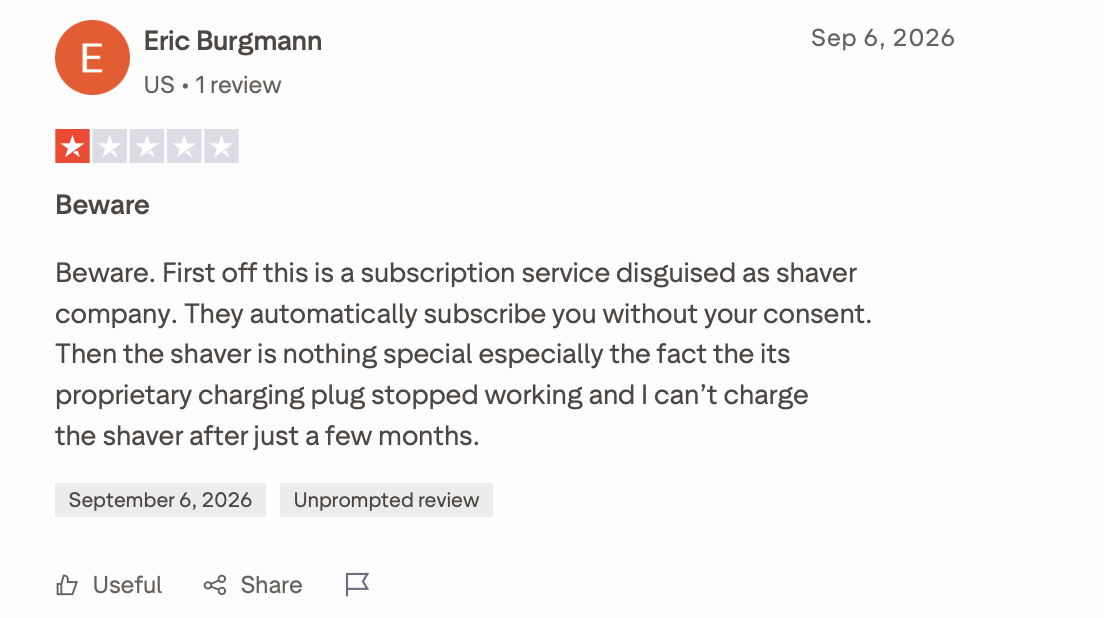
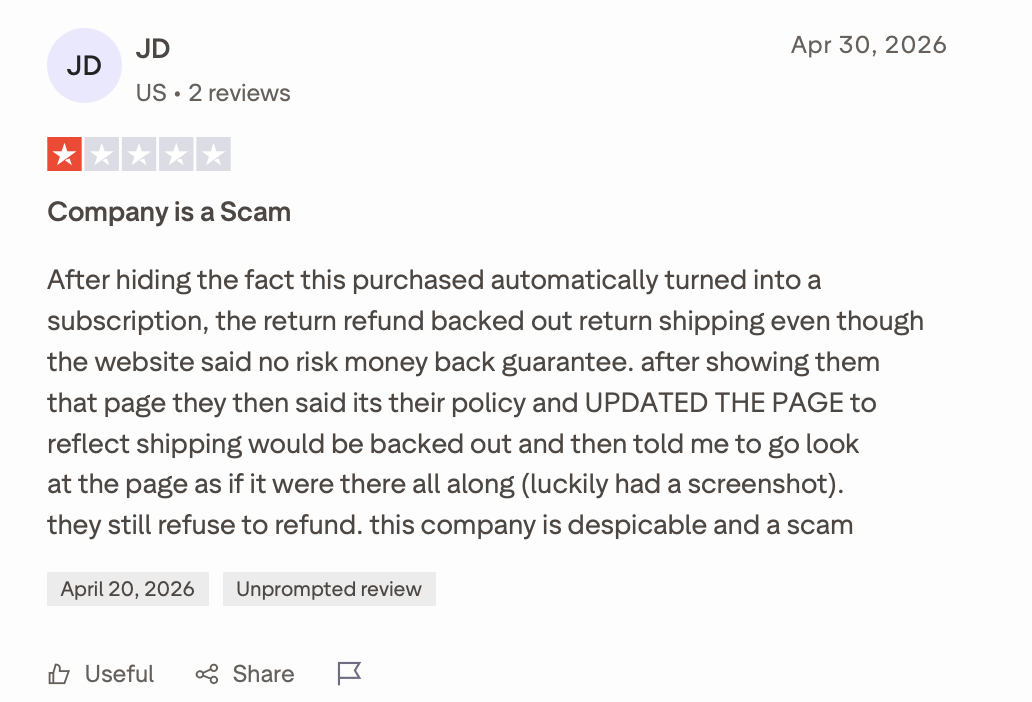
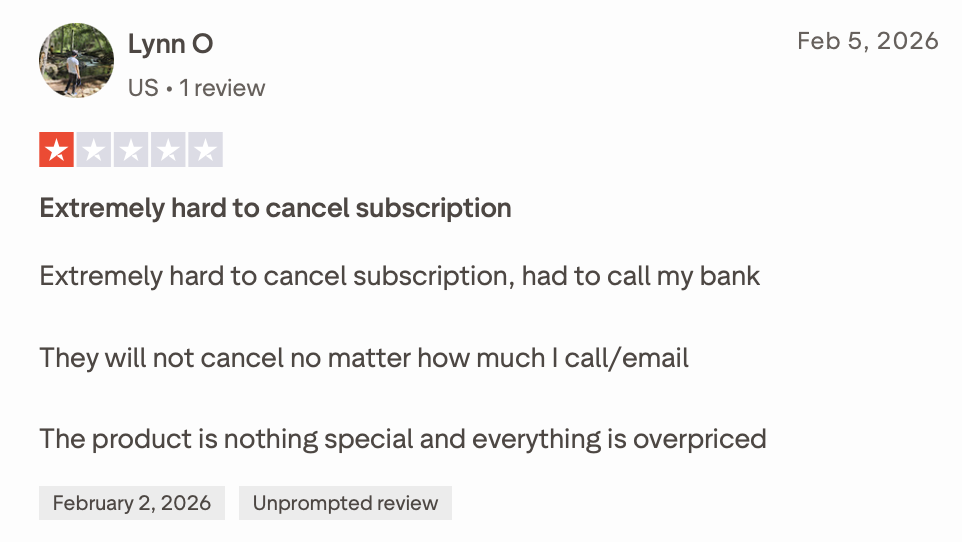
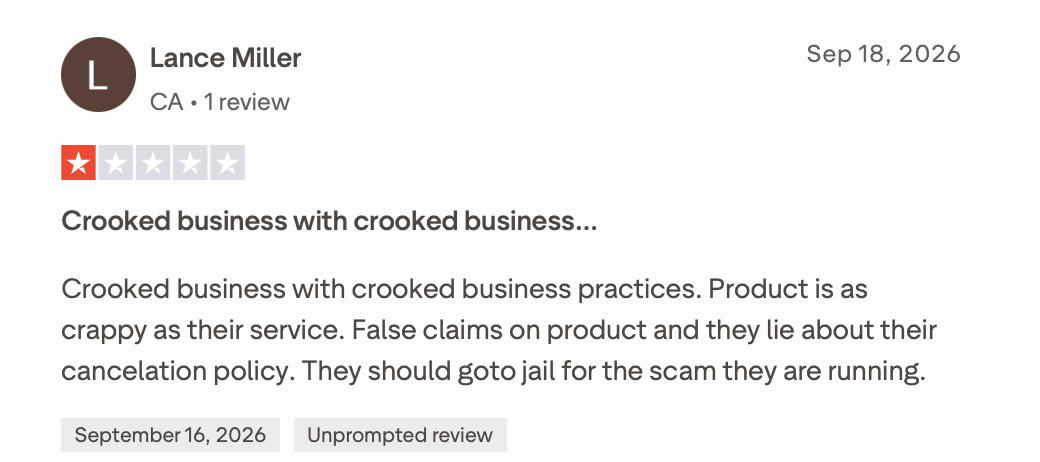
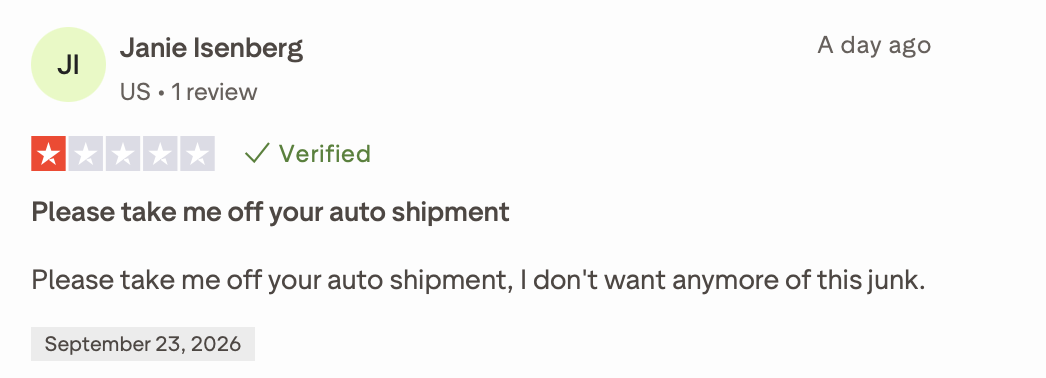
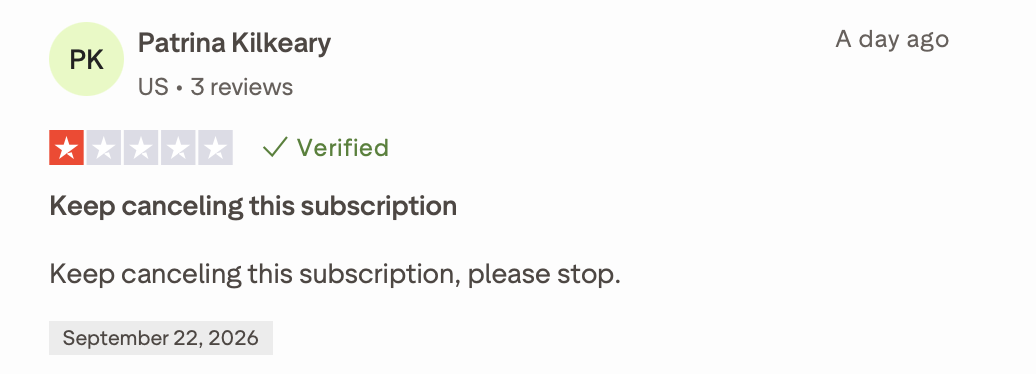
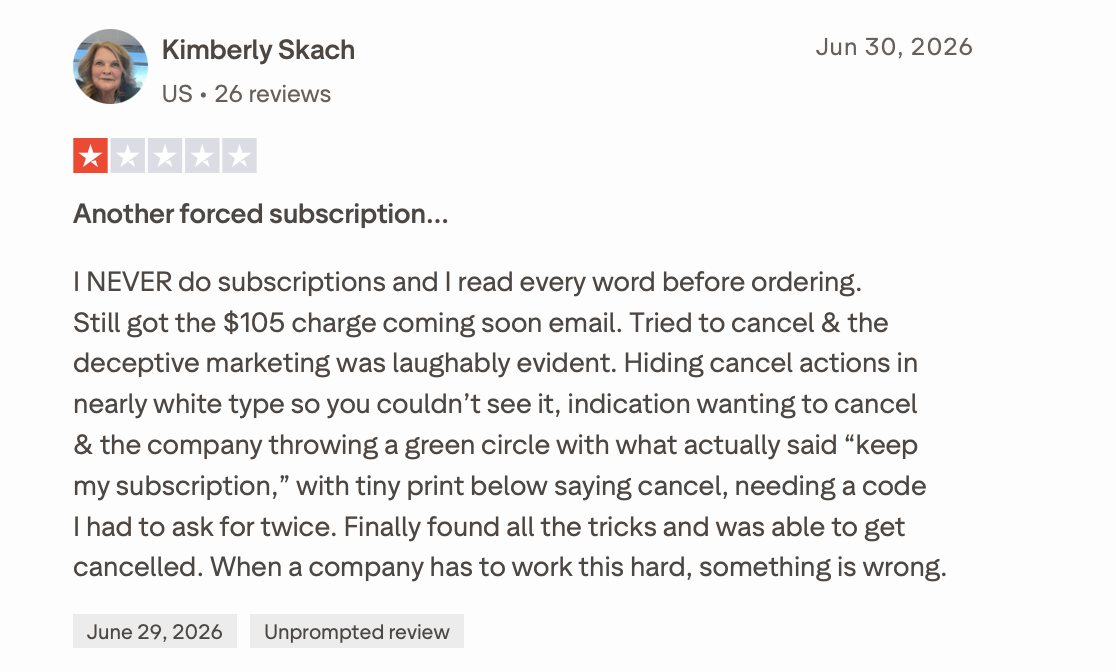
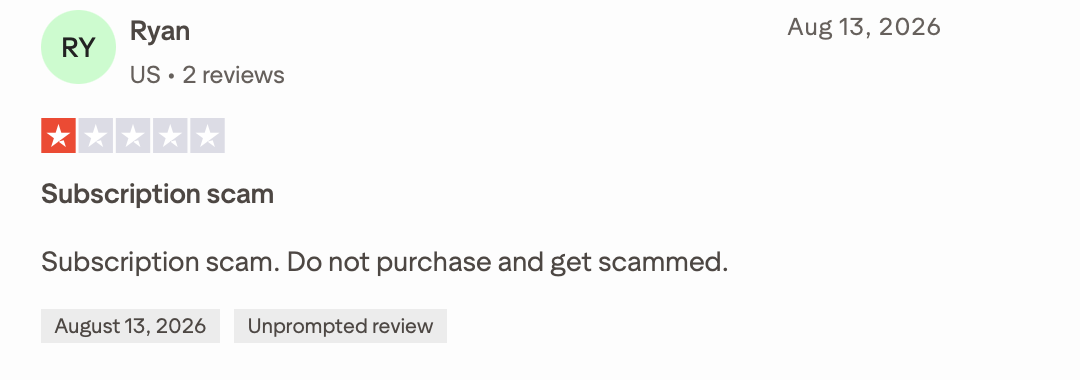
Consumers report recurring billing they do not remember authorizing, duplicate transactions, and charges that appear to go through after a checkout tells them the payment was declined. In the allegations I make later in this report, I allege that hidden subscriptions and rebills were structured into alternative landing pages and checkout flows that obscured the billing terms.
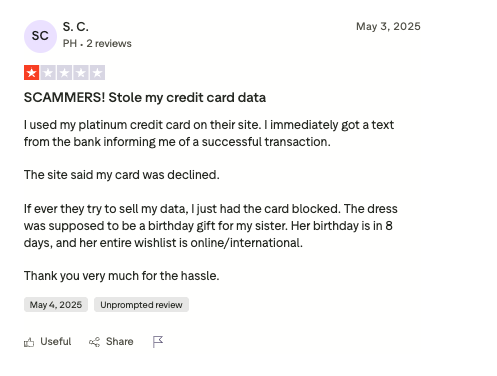
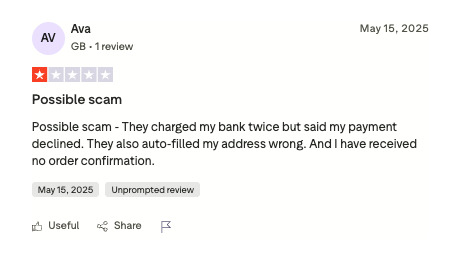
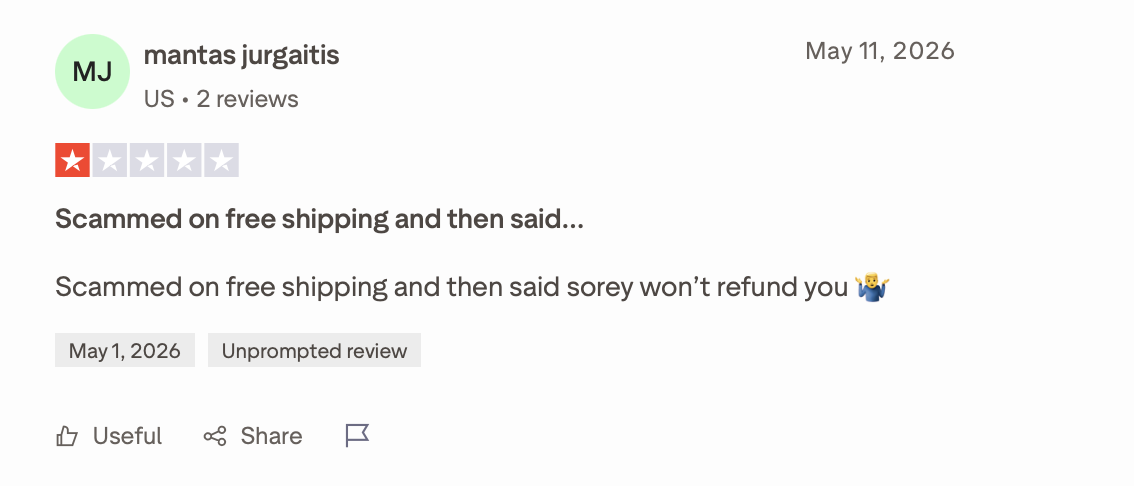
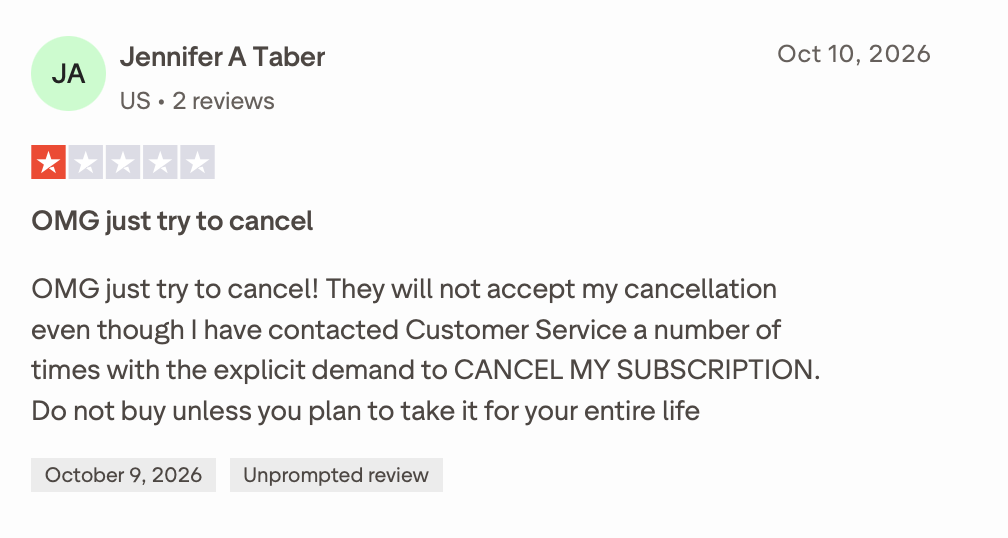
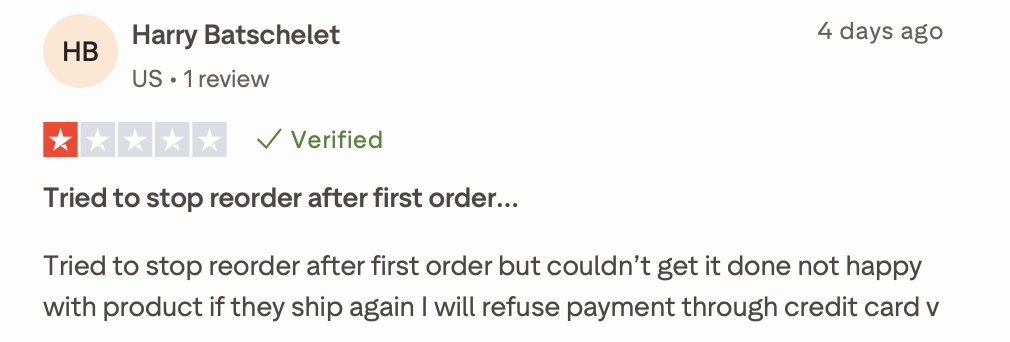
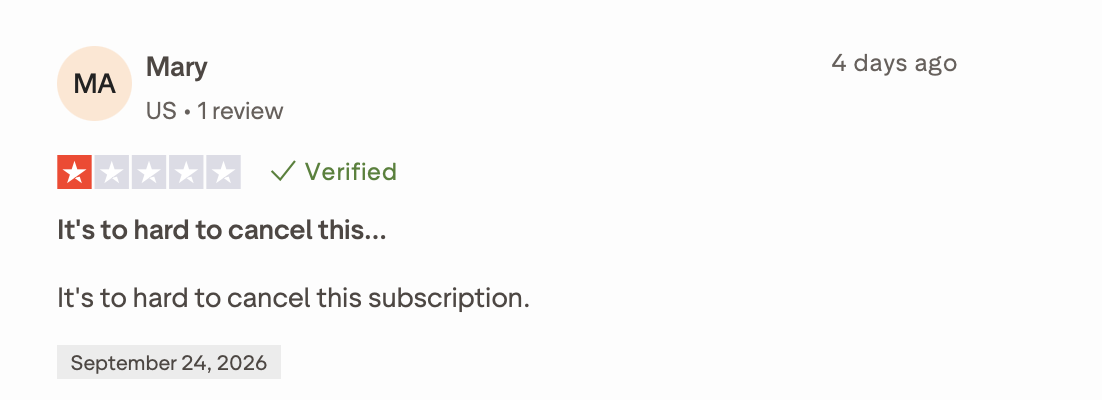
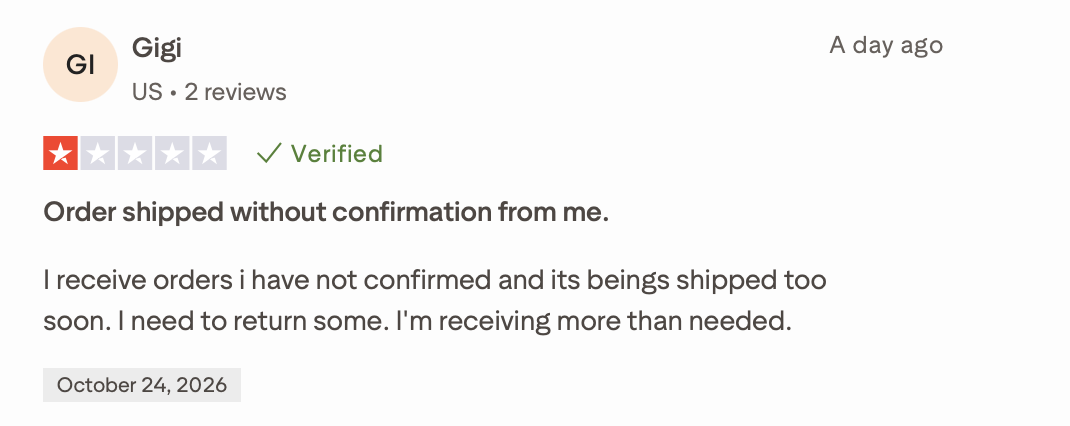
Below are additional Trustpilot reviews from consumers who say they were enrolled in subscriptions or charged without their authorization. Several describe cancellation attempts that went nowhere, charges that continued after cancelling, and refund requests that were refused. Where a brand name is not visible in the screenshot, the caption says so rather than guessing. They are shown as consumer complaints, not established findings.
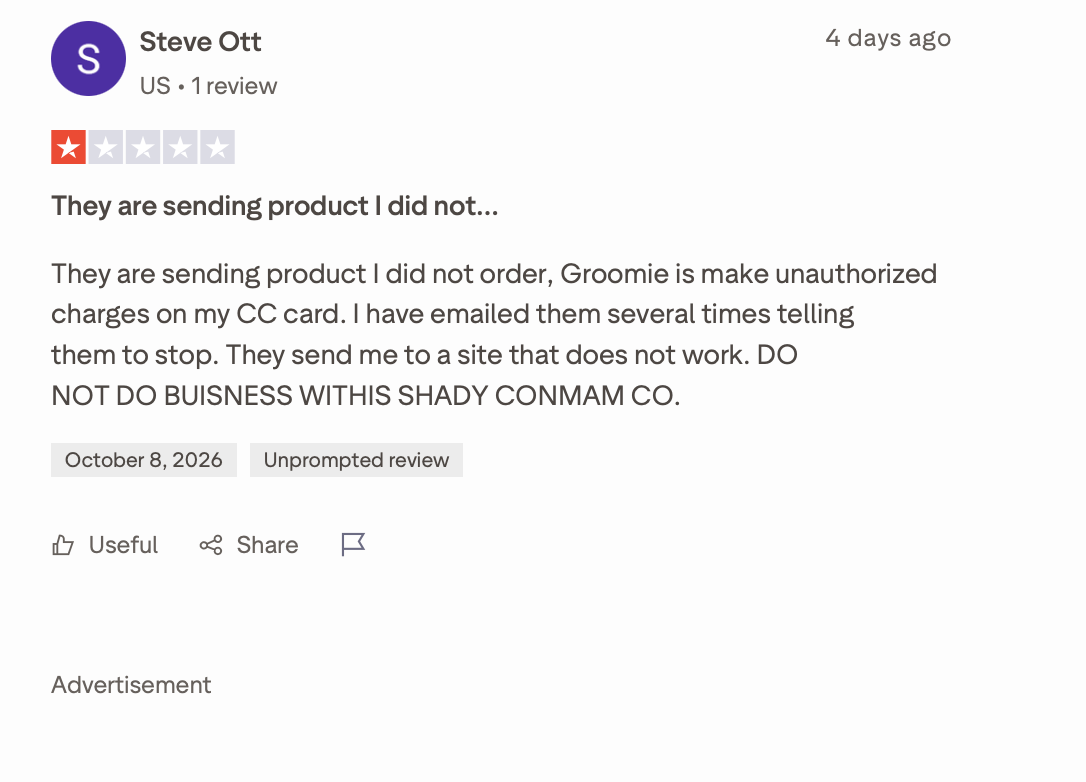
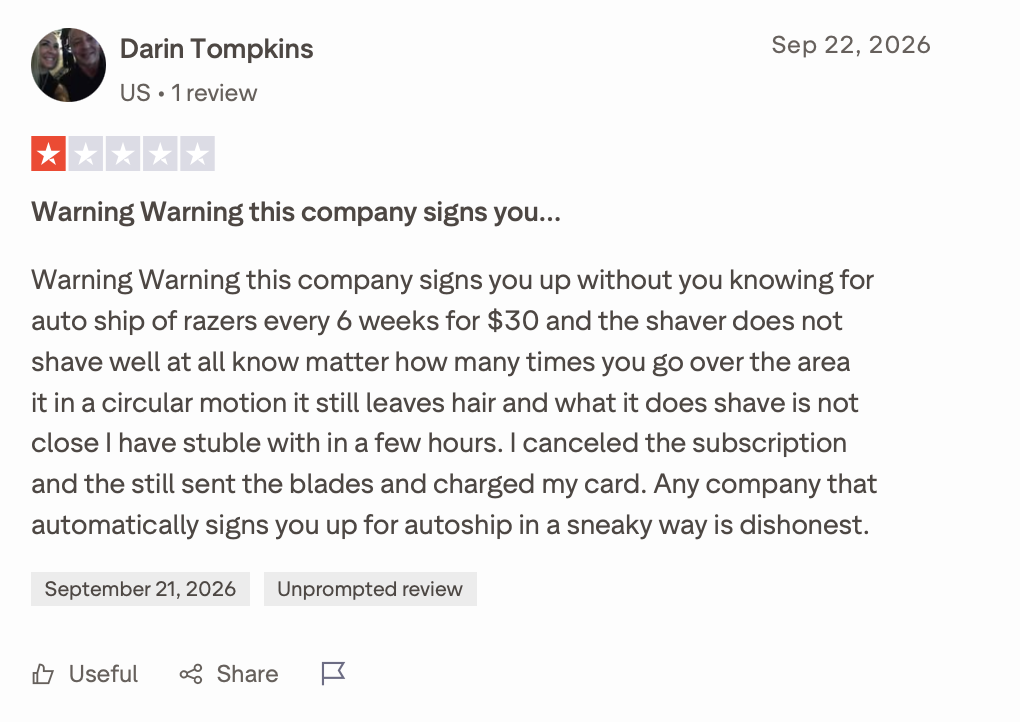
Products Never Delivered
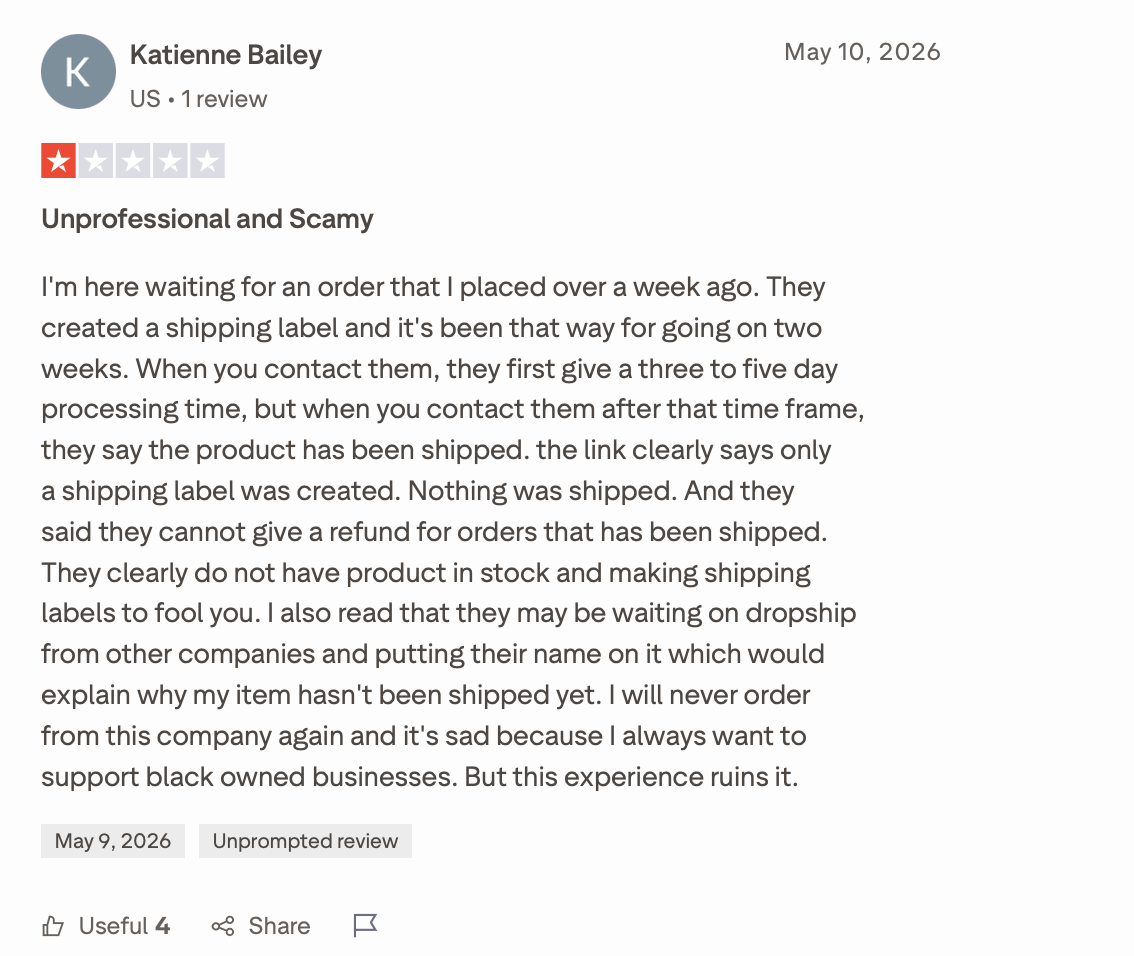
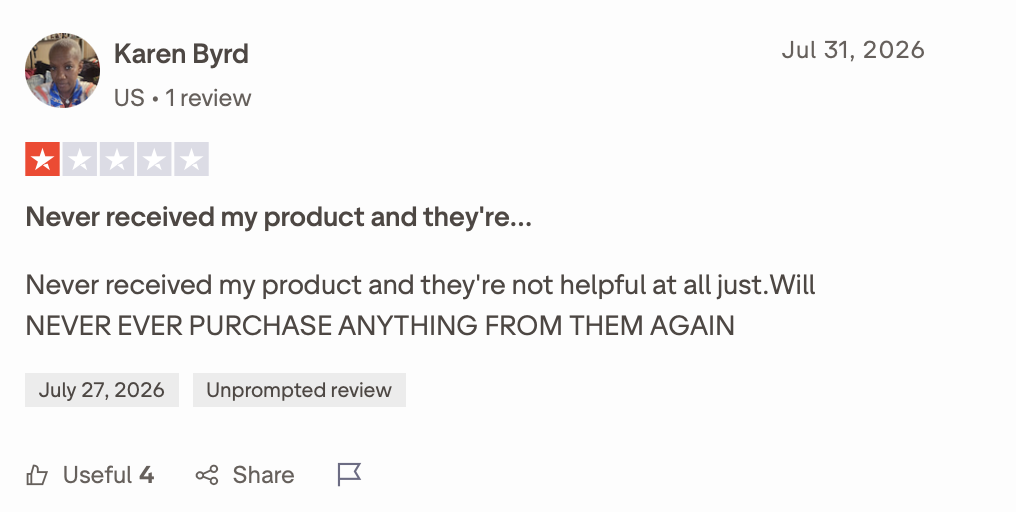
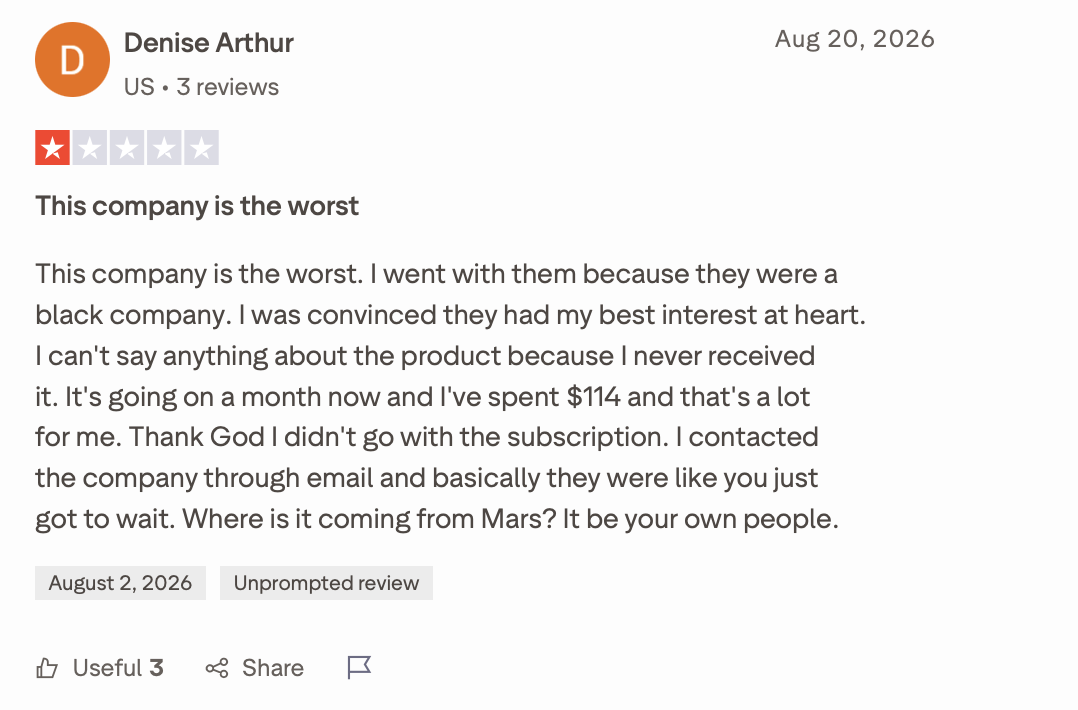
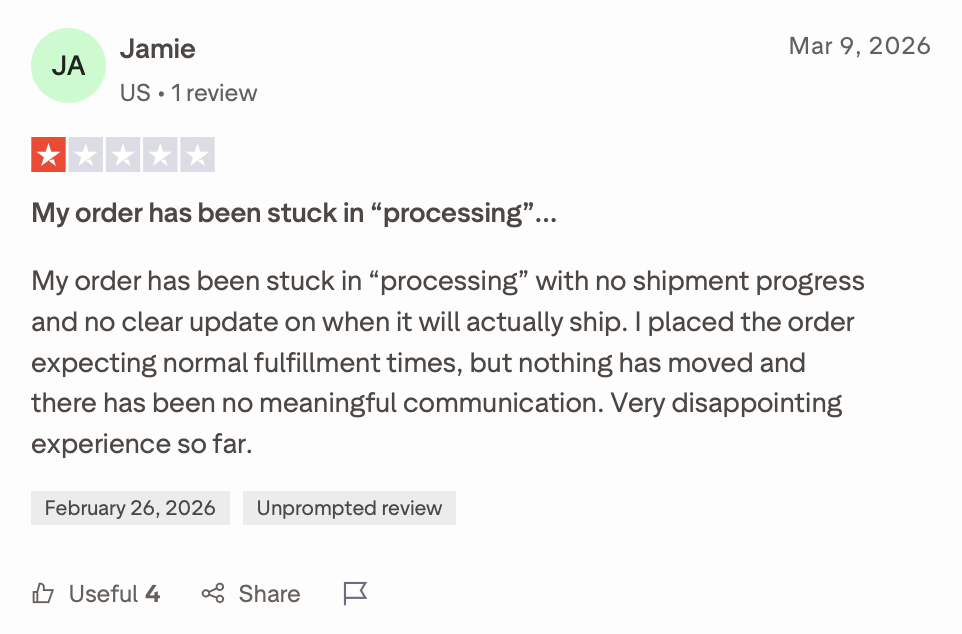
Other consumers describe orders that never arrive. Trustpilot product reviews for Jupi Nutrition show a 2.69 average across 39 reviews, including multiple verified buyers reporting orders that never shipped or were never received.
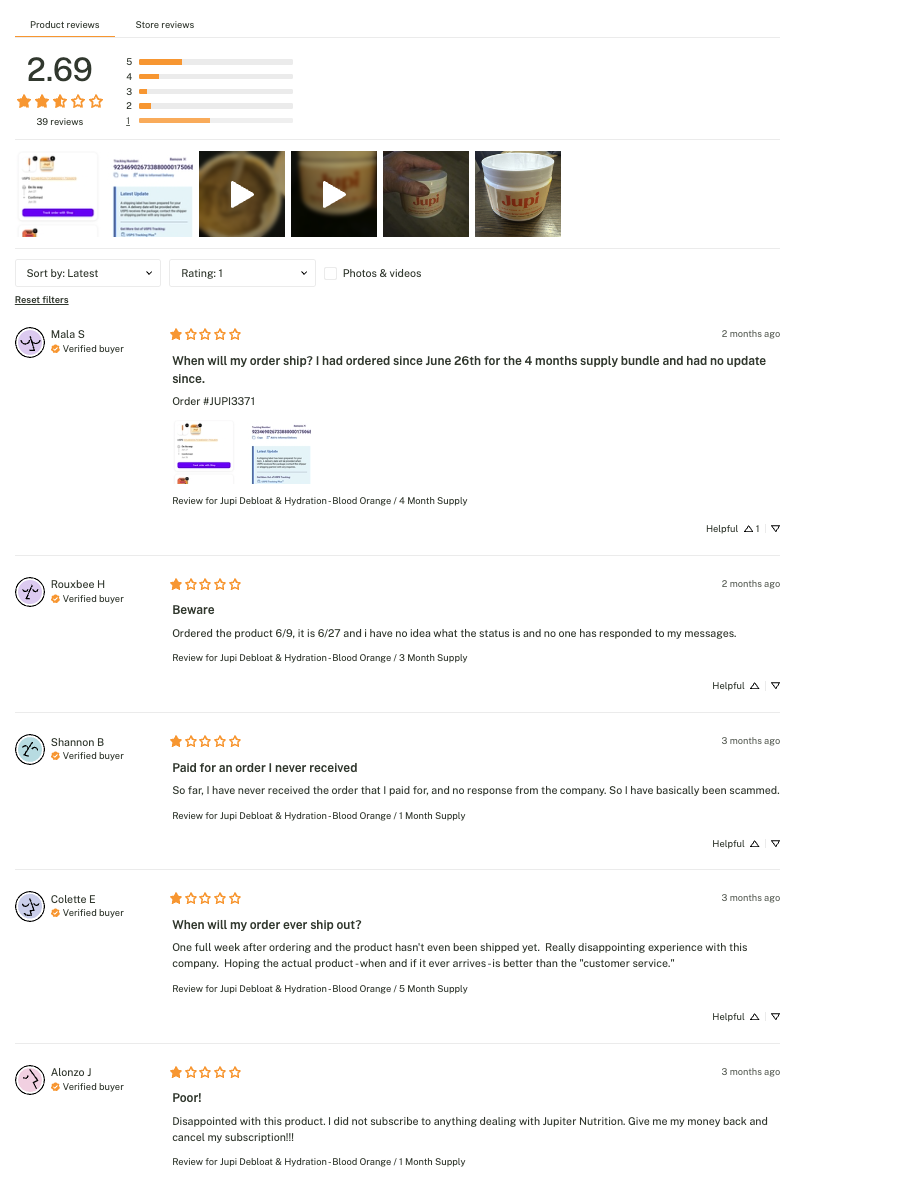
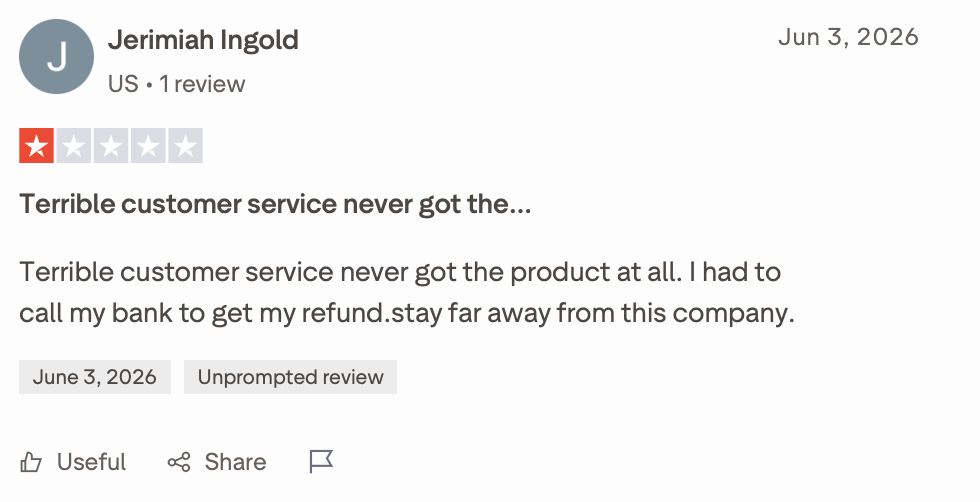
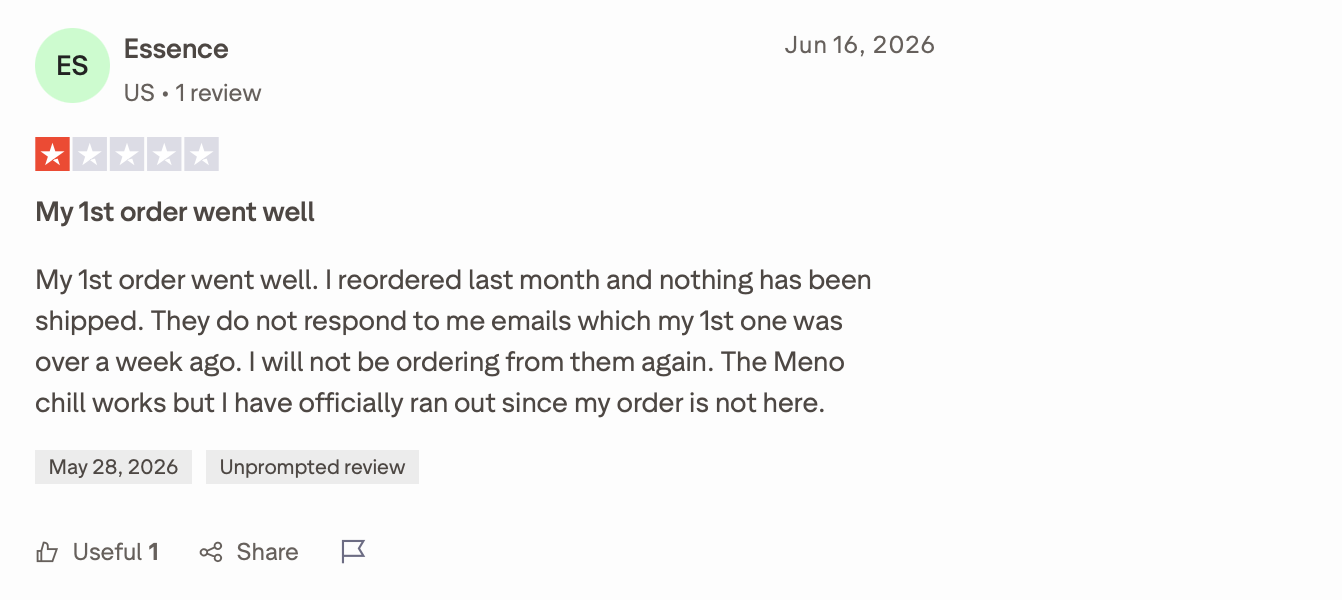
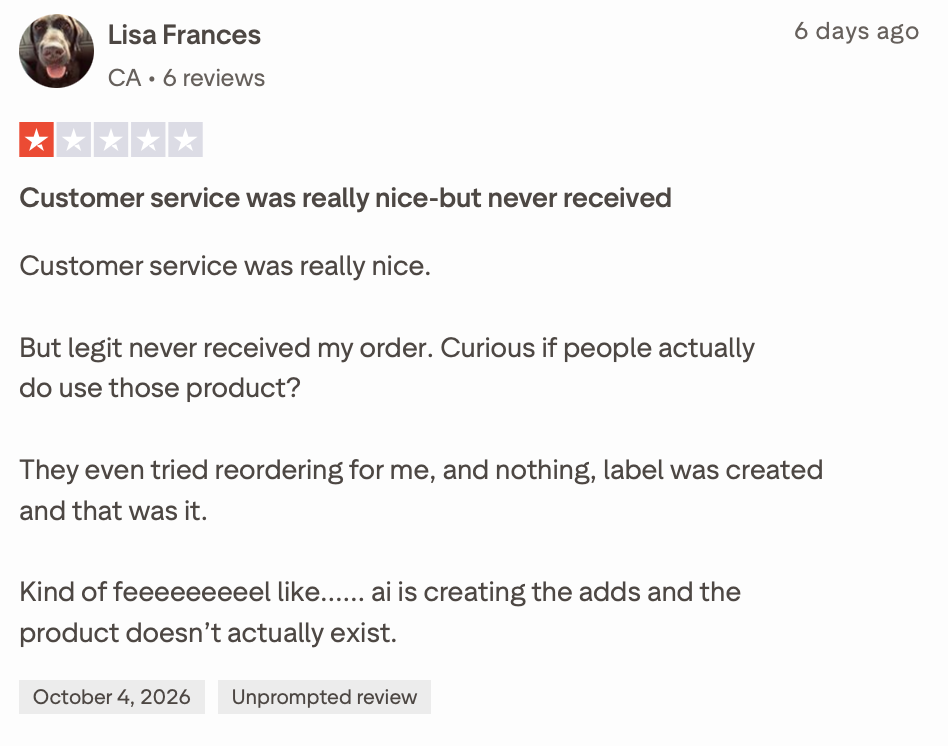
Below are additional Trustpilot reviews from consumers who say their orders were never shipped. The reviews report no shipment progress despite a shipping label, unanswered emails, money spent on products that never arrived, and refunds that could only be recovered by calling a bank. They are shown as consumer complaints, not established findings.
Refund and Cancellation Difficulties
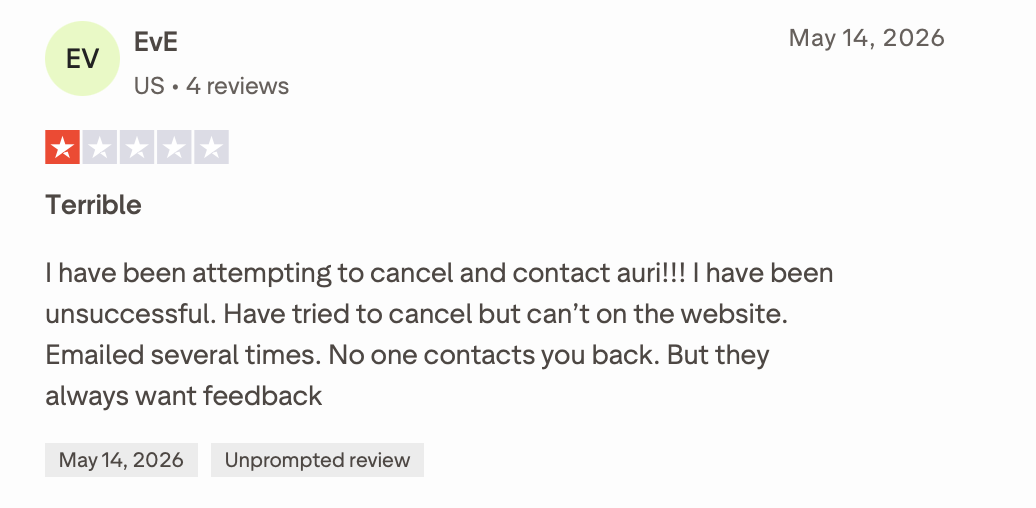
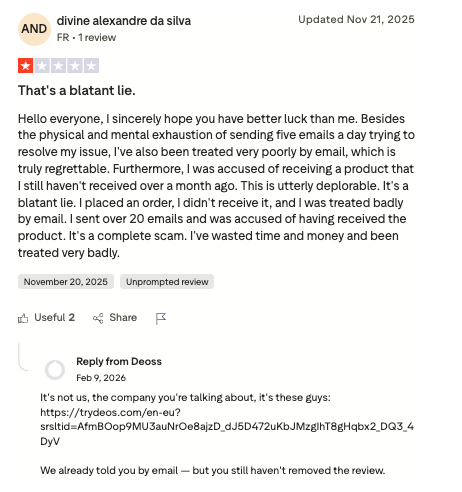
When something goes wrong, consumers describe cancellation attempts that go nowhere, refund requests that go unanswered, and customer service that redirects people to unrelated companies.
Health and Product Safety Concerns
Some of the most serious reports involve health. A Reddit thread in r/PCOS about Sisters Nutrition includes a user comment describing adverse effects after taking the gummies. More serious still is the family account below, which I present as an unverified claim from the people who made it.
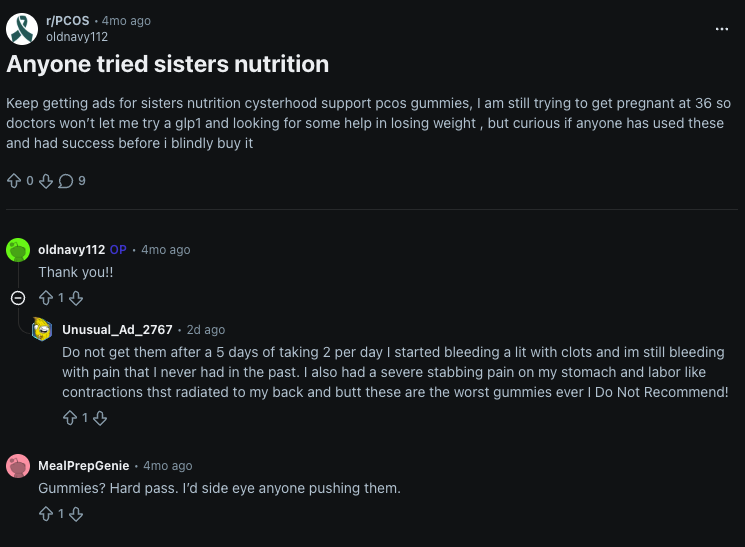
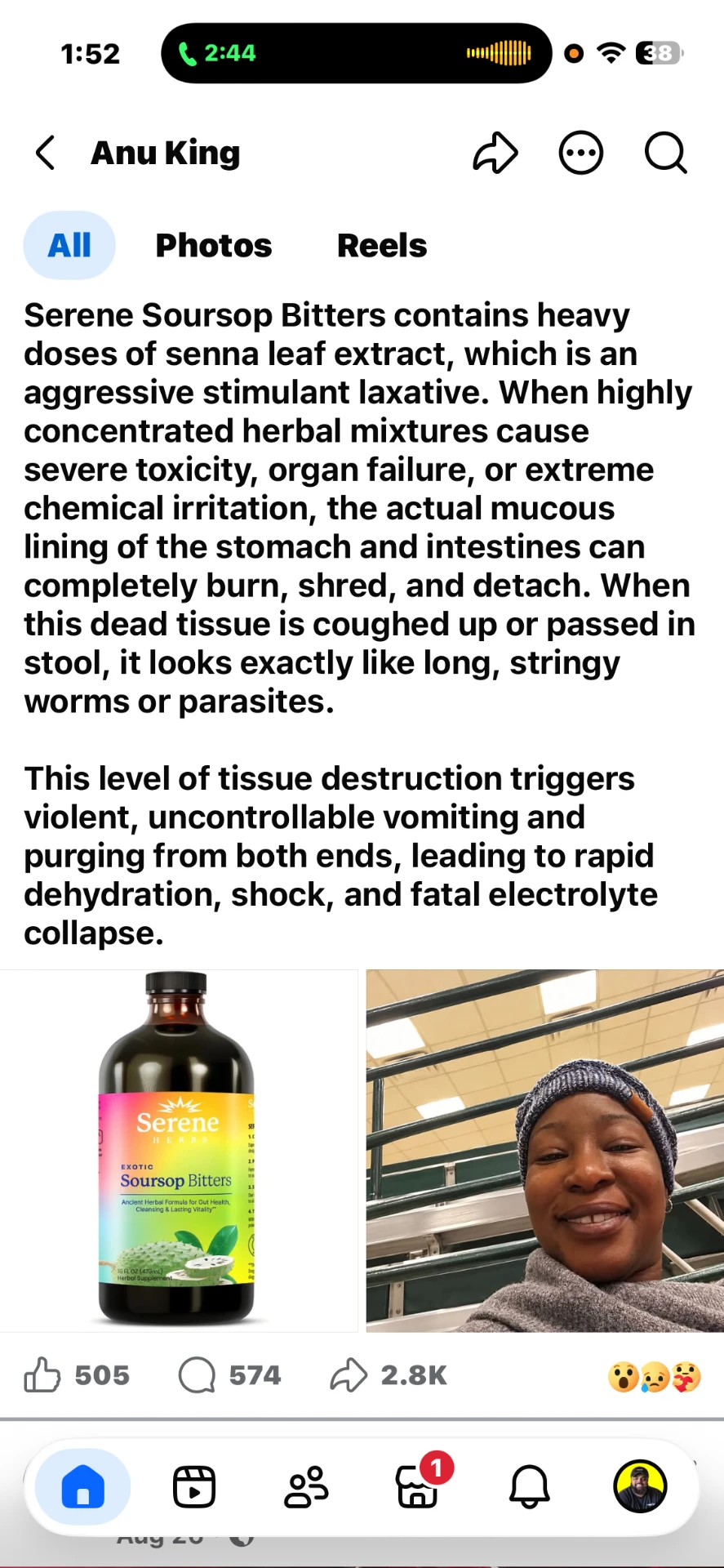
In a public Facebook post, a man named Anu King wrote that his cousin, Iman, of Chicago, "passed away last Thursday from drinking" Serene Herbs' Soursop Bitters, and that the coroner determined she had a heart attack "brought on by critically low electrolyte levels after taking the bittersweet supplement." He warned others: "Maybe you know someone who is taking it." The post claims the product contains heavy doses of senna leaf extract, a stimulant laxative. It was shared more than 2,800 times and drew hundreds of comments as people passed the warning along.
I have not seen a coroner's report, death certificate or medical record, and I have not independently confirmed the cause of death or that the product caused it. The medical and ingredient claims are the poster's, not mine. I am including this because a family is publicly asking for help and warning others, and I believe regulators should look into it. If the family wants to share more, I want to hear from them.
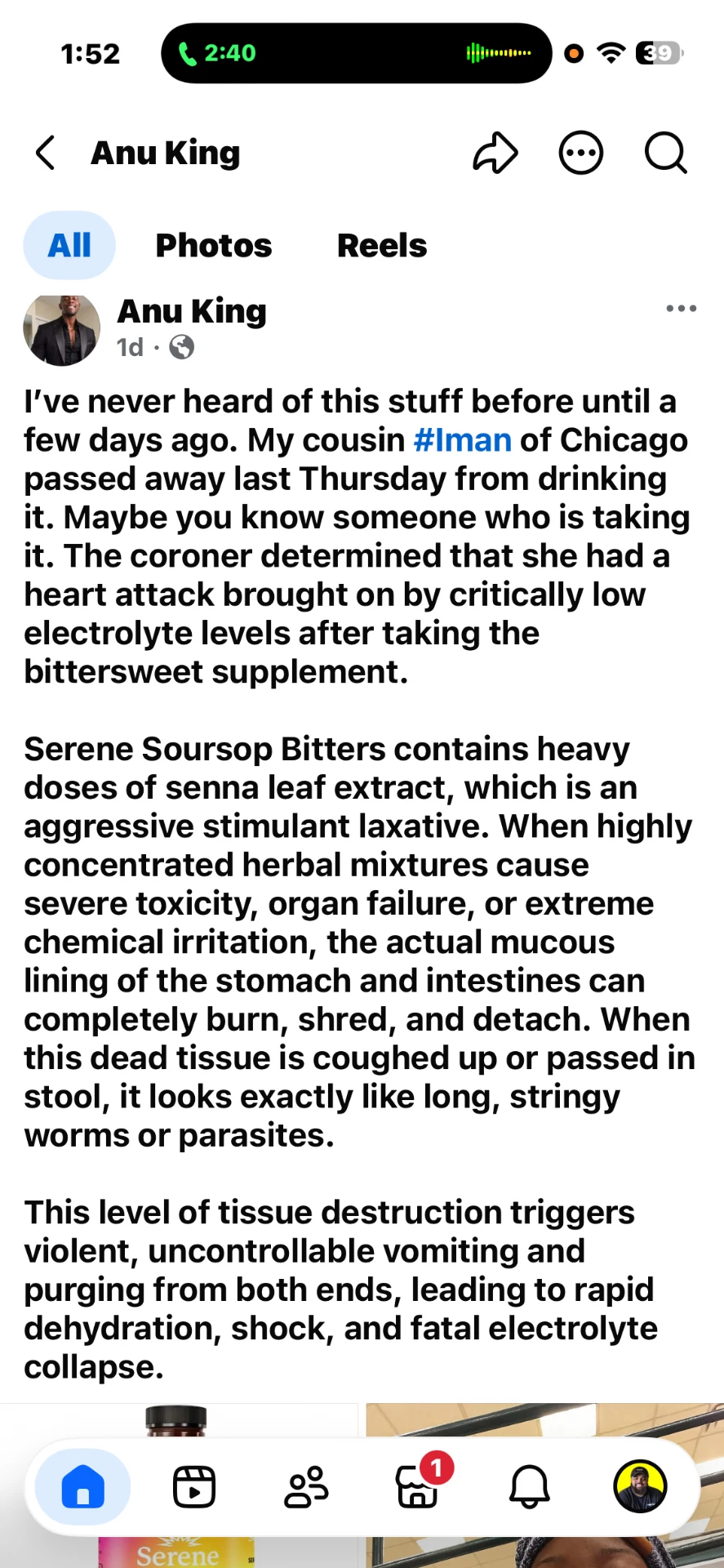
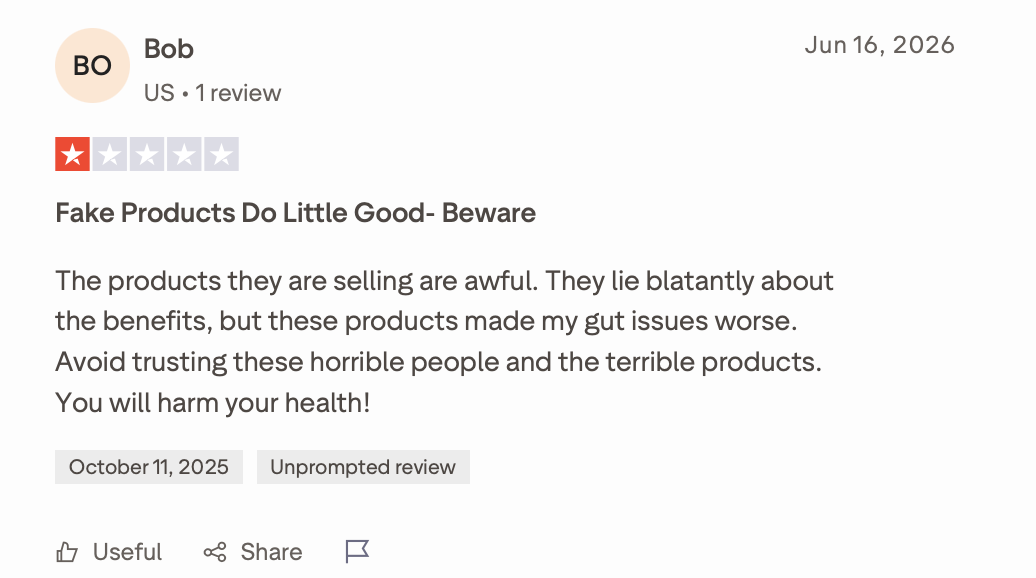
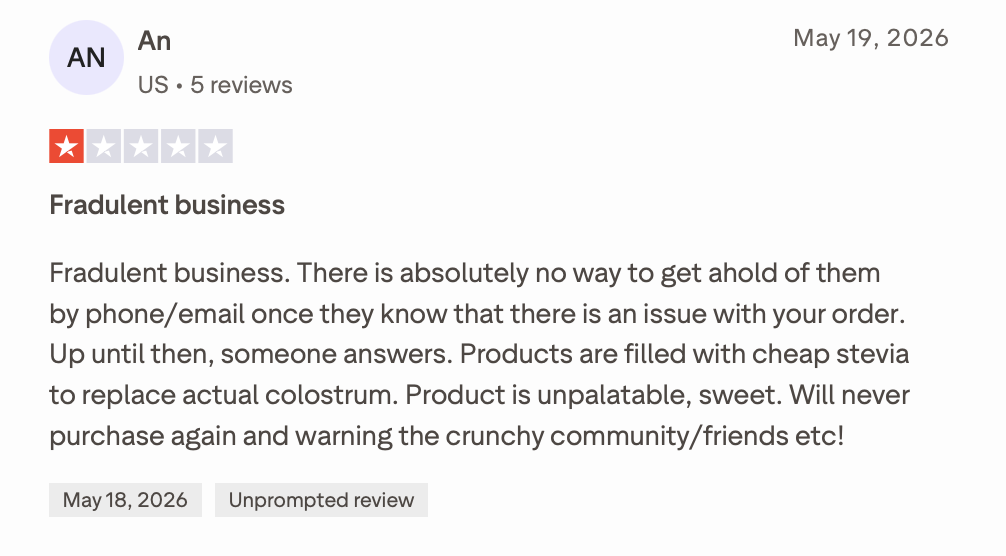
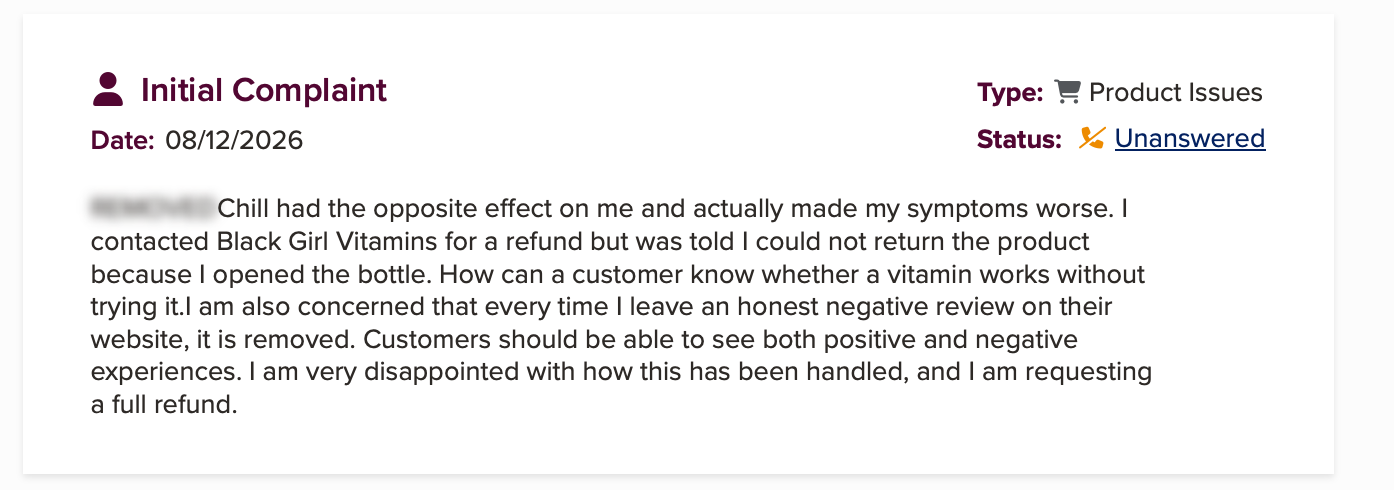
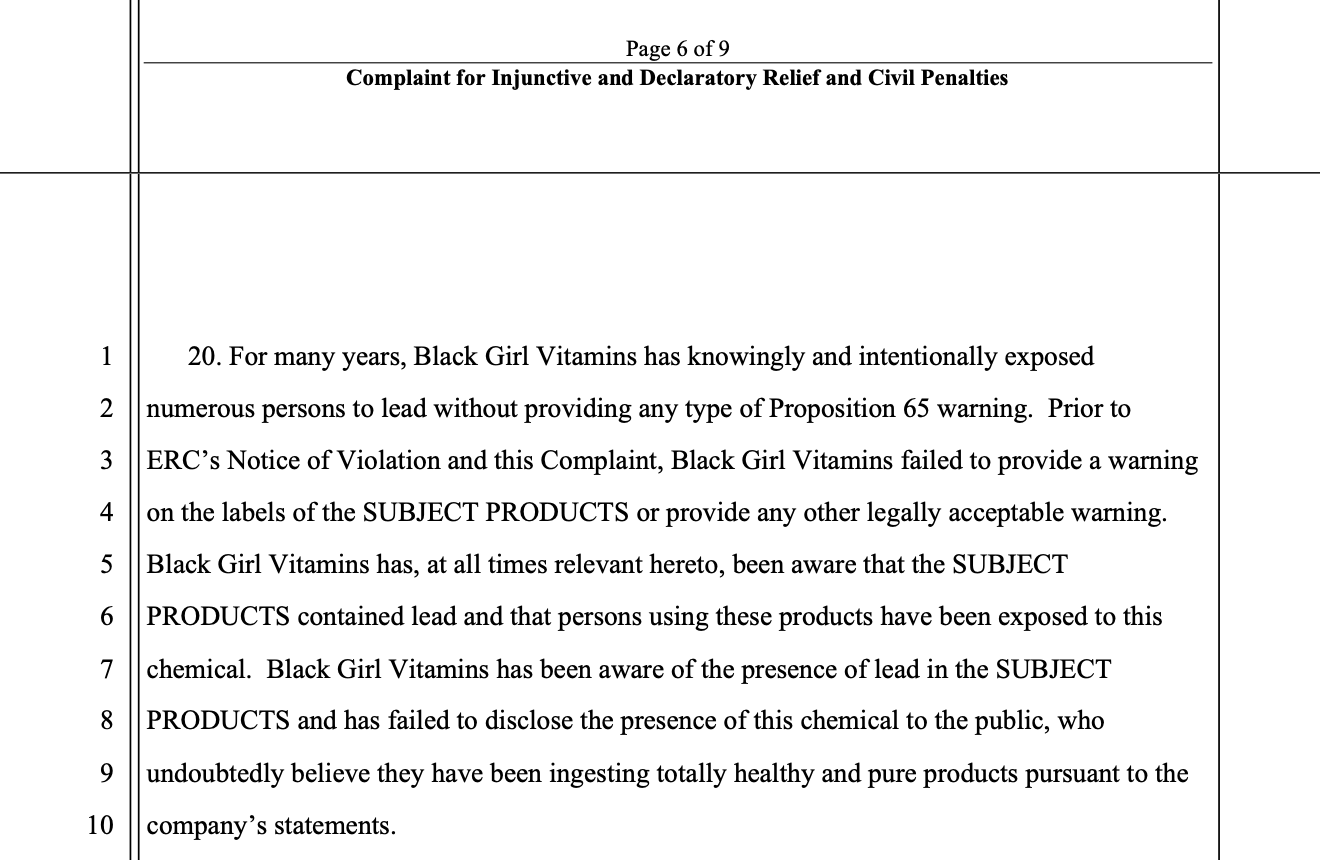
Other consumers describe products that made them feel worse rather than better. The reports below are consumer accounts and, in one case, allegations inside a legal filing. None has been independently verified, and the brand behind two of them is not visible in the screenshot.
Repeated Patterns of Deceptive Advertising
Finally, consumers increasingly encounter advertisements built on synthetic identities: AI-generated medical professionals, fabricated testimonials, and endorsements from people who may not exist. I document how that machinery works in the next section. One recurring complaint pattern adds confusion on top of it: brands whose names resemble other brands, so reviews end up left on the wrong profiles and consumers are left not knowing who to take action against. The complaint below describes an alleged rebrand from Reus Research to “Cata-Kor” alongside a cited “F” Better Business Bureau rating.

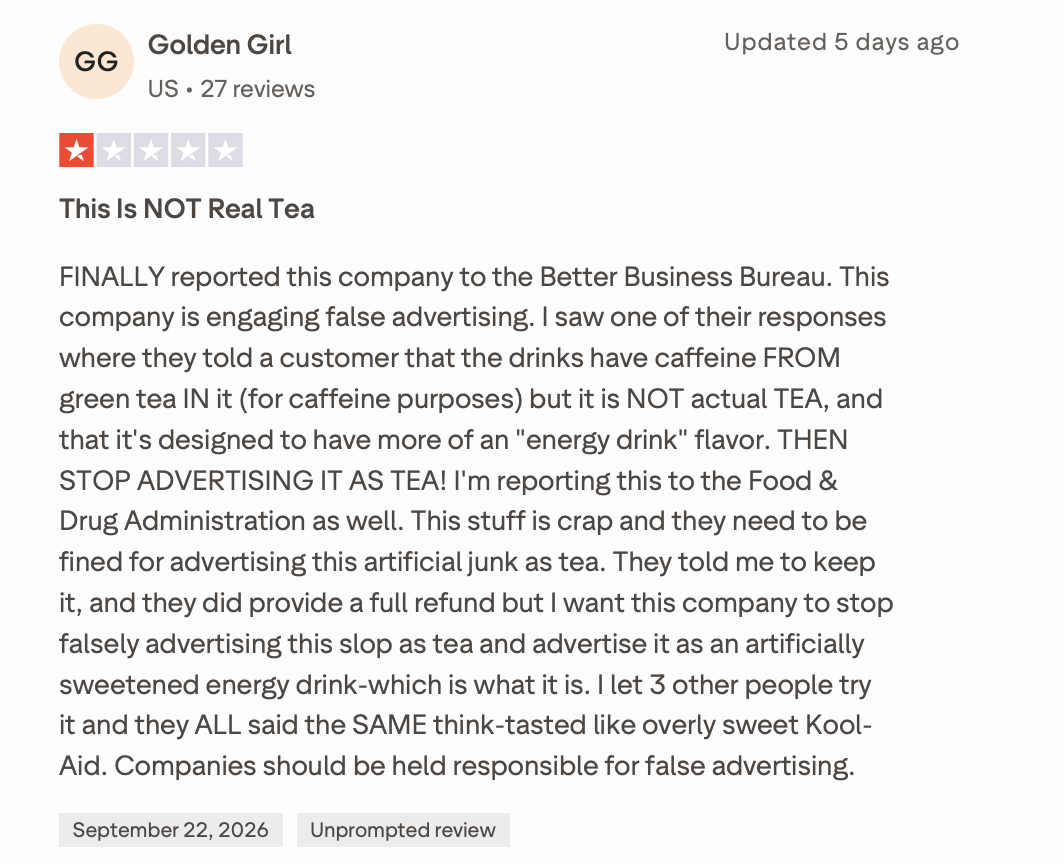
Other reviews in this pattern speak to the advertising itself: reviewers describing ads that did not match the product, promotions they found misleading, and doubts about whether the heavily advertised product resembles what actually ships. These are consumer complaints as posted; none is an established finding, and the company is not identified in the screenshots.
If you believe you have experienced deceptive advertising, unauthorized charges, or other potentially fraudulent practices involving WIRED2SCALE or associated brands, you may file a report with the FTC. Provide truthful information based on your own experiences or available evidence. Filing a report does not guarantee an investigation.
Cryptocurrency Investors: The 2024 $LABZ Controversy
In 2024, supplement company Insane Labz became the subject of an investigation into its $LABZ cryptocurrency promotion.
According to an August 2024 investigation published by Decrypt, individuals impersonating UFC President Dana White, fighter Nate Diaz, and internet personality Hasbulla were allegedly encouraged and paid to promote the cryptocurrency while investors were led to believe the endorsements were genuine.
The investigation cited Telegram communications, investor testimony, and blockchain analysis conducted with Bubblemaps linking wallets associated with the token's creation to payments made to the impersonators.
During the promotion, the token's reported market capitalization rose from approximately $3 million to a peak of $15 million before its value subsequently collapsed by more than 90%. These figures describe market capitalization, not verified proceeds obtained by the promoters or confirmed investor losses.
The allegations raise serious questions about deceptive endorsements, investor inducement, and the use of fabricated identities to promote financial products. The reporting does not, by itself, establish that a court or regulator found the project to be a Ponzi scheme.
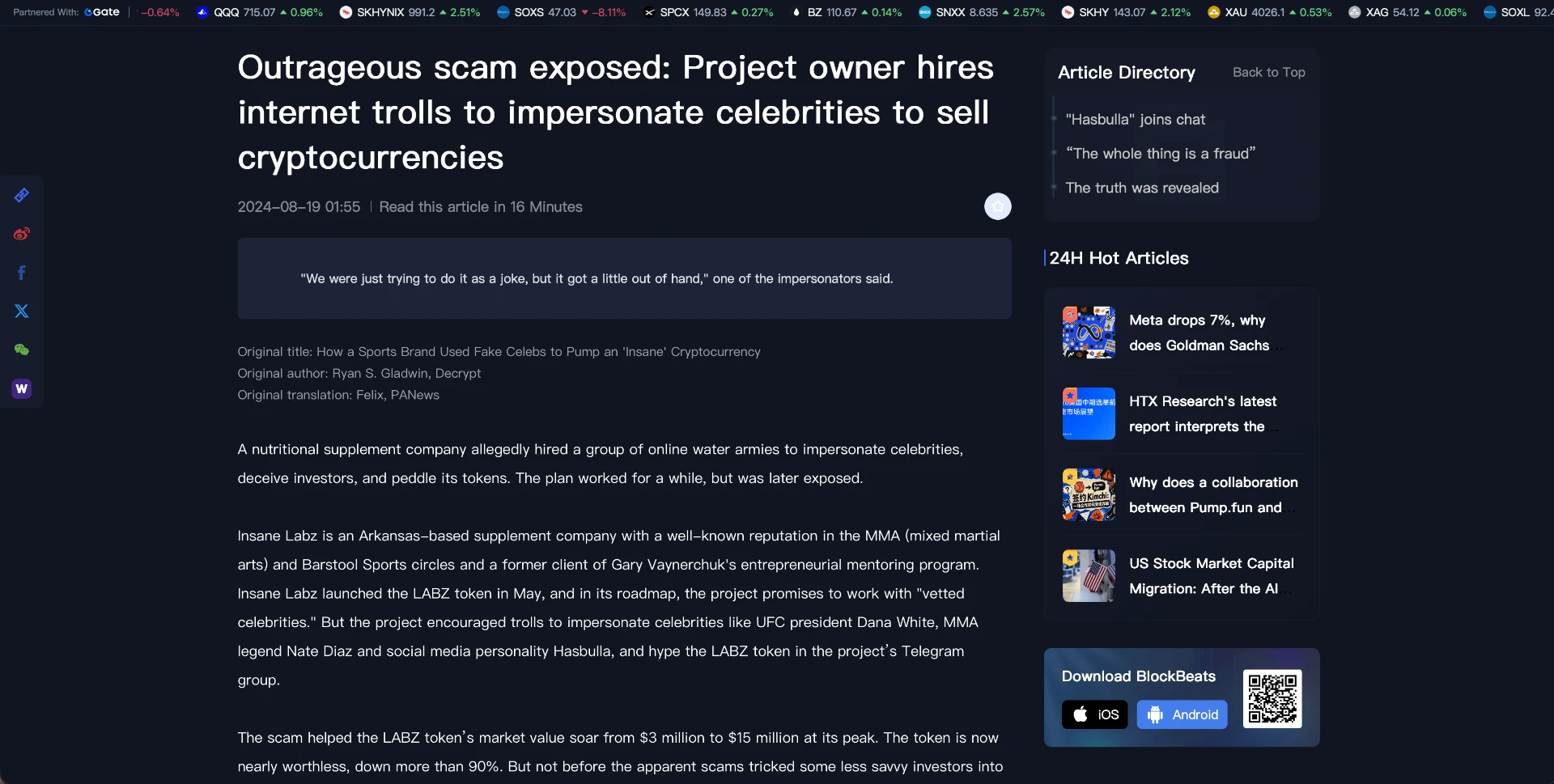
Source: Decrypt, August 12, 2024: How a Sports Brand Used Fake Celebs to Pump an ‘Insane’ Cryptocurrency
The complaints and incidents presented here represent only a selection of the publicly reported allegations and documented concerns involving the businesses examined in this investigation. They are not an exhaustive inventory of consumer complaints, disputed transactions, advertising practices, or allegations associated with these brands. Inclusion in this investigation does not establish that every allegation is substantiated or that every business or individual named bears responsibility.
If you believe you have experienced deceptive advertising, unauthorized charges, or other potentially fraudulent practices involving WIRED2SCALE or associated brands, you may file a report with the FTC. Provide truthful information based on your own experiences or available evidence. Filing a report does not guarantee an investigation.
From the authorWhy I Have Firsthand Knowledge
From November 2024 through August 2026, I worked inside advertising operations connected to Wired2Scale, BNGR and several consumer brands as a UGC creator, videographer, editor, designer and creative strategist. My responsibilities gave me direct access to advertising campaigns, creative production, campaign performance and the marketing funnels consumers actually encountered. As I worked, I began comparing the practices I was witnessing with the complaints consumers were reporting publicly.
The exhibits below are a small selection of the internal records I preserved to substantiate that access. They show advertising spend on my original creative beside the AI-generated and derivative creative built from it - the same practice this report examines from the consumer's side.
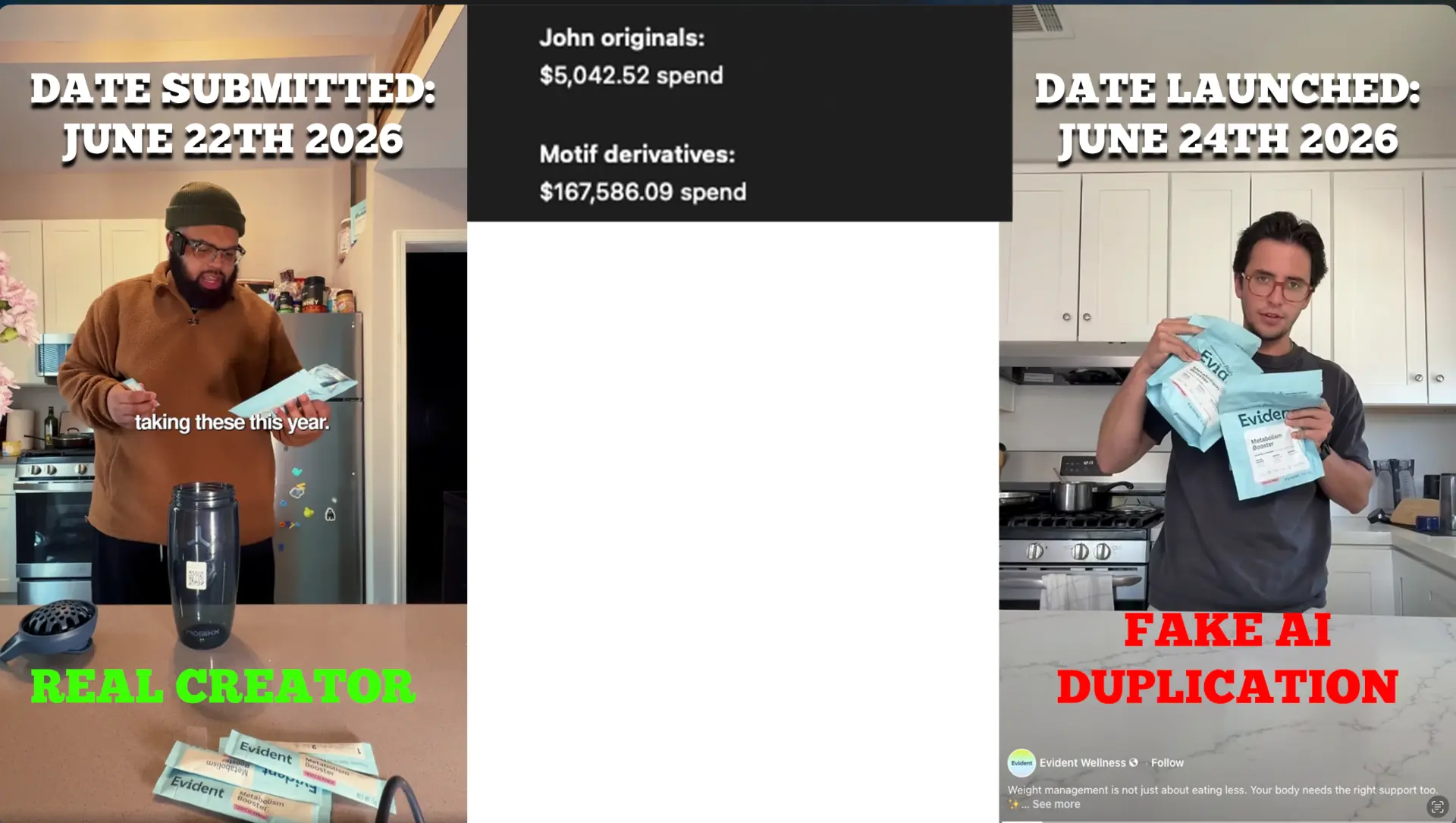
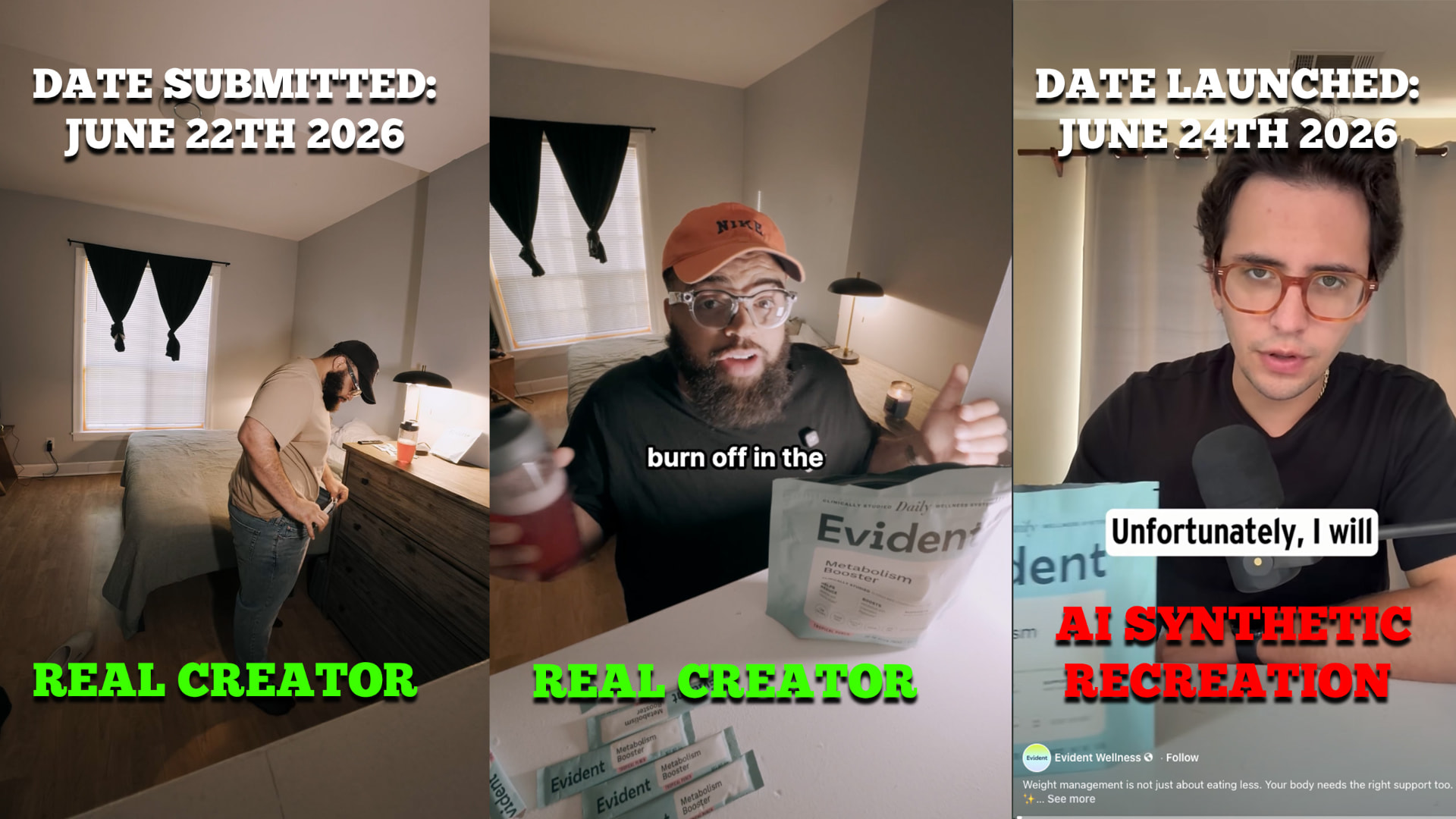
Section 02How the Advertising Works
AI-generated UGC is not illegal, nor is artificial intelligence in advertising inherently deceptive. My concern is how I believe Jacob Canfield, Brandon Fink, and individuals within their business network have used this technology alongside a broader pattern of questionable commercial practices.
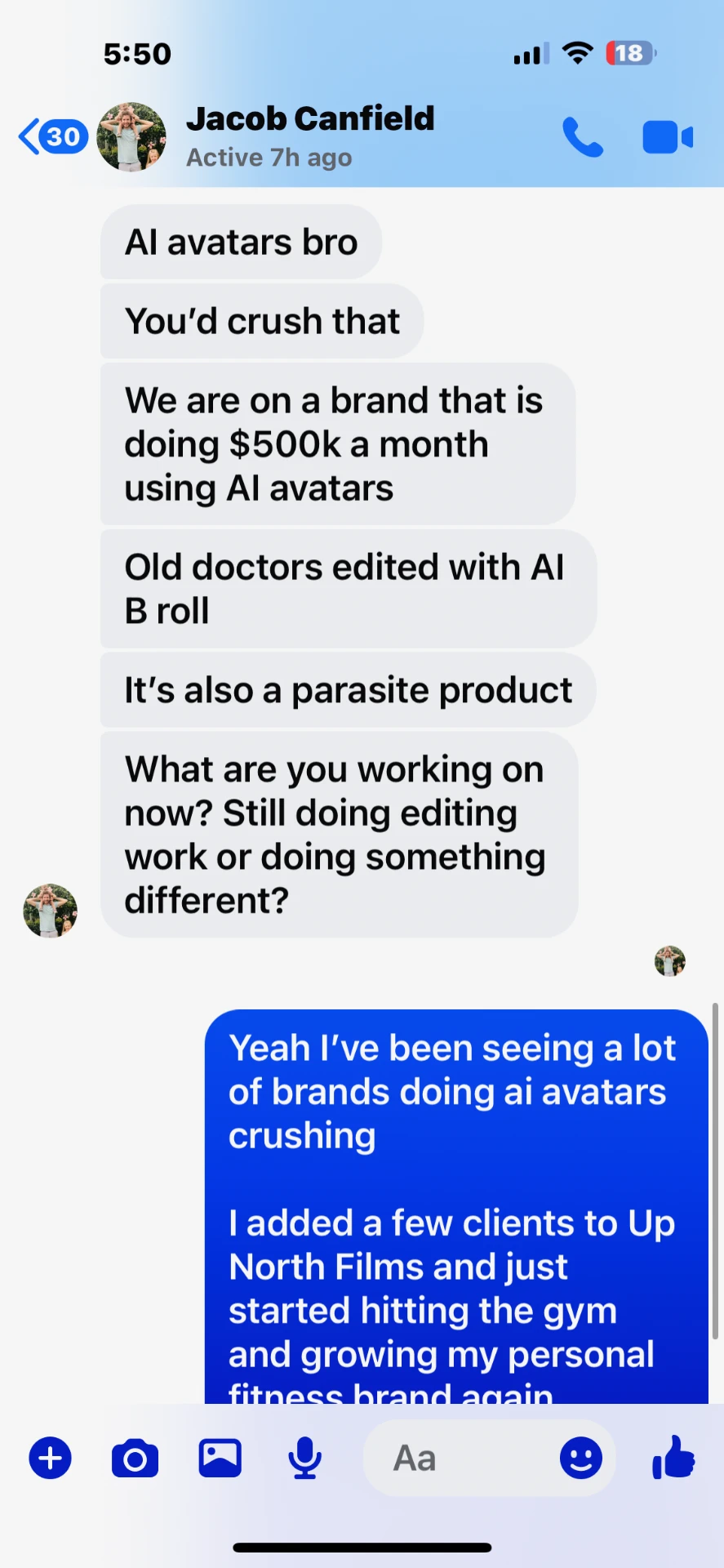
I encountered thousands of AI-generated advertisements, synthetic identities, fabricated or potentially misleading testimonials, and digital personas presented as customers, founders, doctors, nurses and other authority figures. Some portrayed personal experiences or professional expertise I believe did not belong to the individuals depicted. Across nearly all of the funnels I examined, I found health claims that exceeded what the research established, and the research itself often appeared fake or, at the very least, misleading.
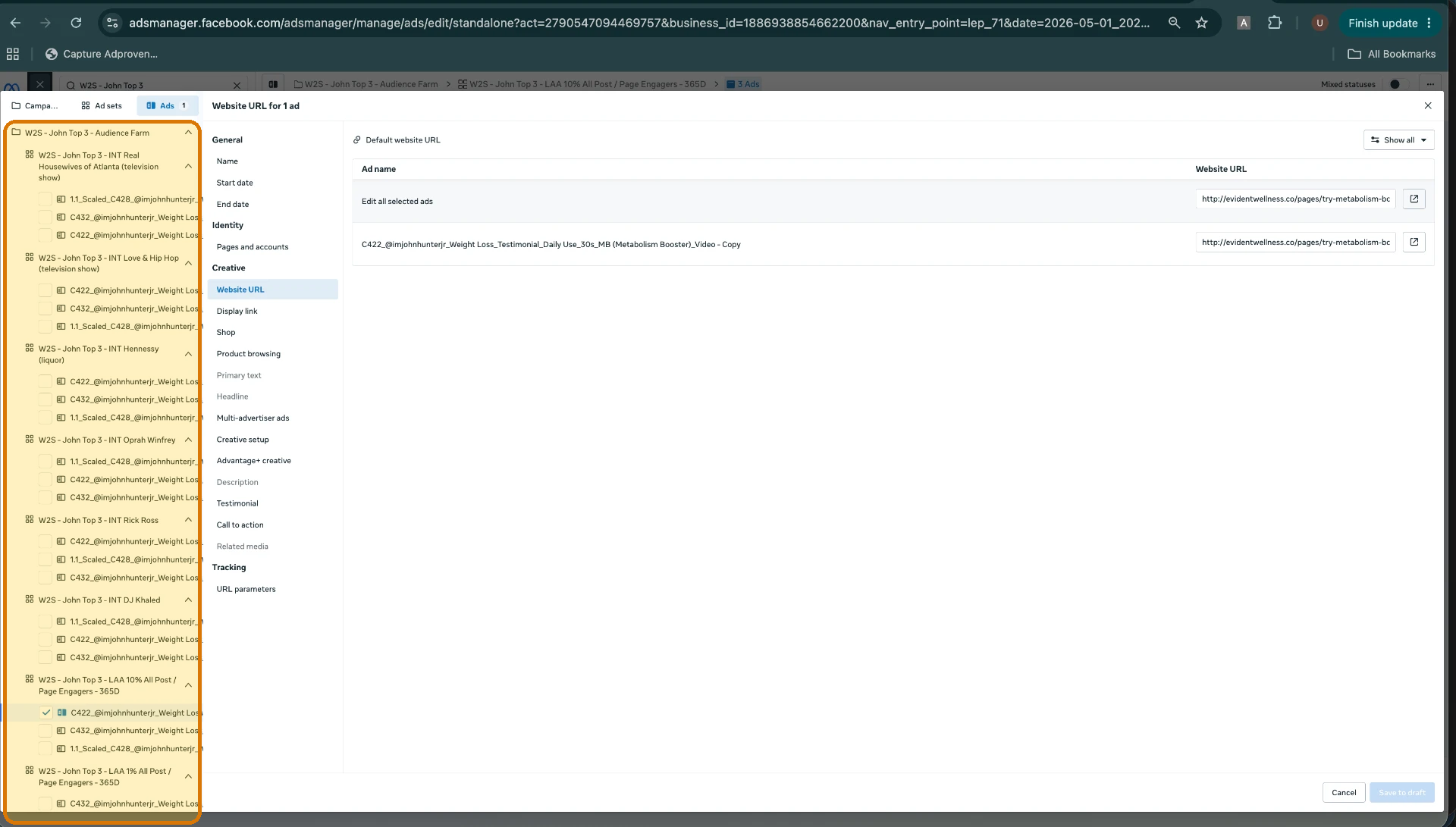
The recording below shows the sequence that concerns me most. An advertisement presents a natural weight-loss supplement, with AI-generated medical professionals appearing to endorse it. A consumer who clicks is taken to a landing page offering GLP-1 medication treatment from another company. I documented at least a dozen Facebook advertisements featuring AI-generated medical professionals in that funnel. This is not speculation: the advertising expenditure and the funnel redirection are firsthand observations, supported by the records I preserved. Playback is accelerated 200%.
That funnel raises separate questions at the same time. The first is consumer deception: advertisements appear to attract consumers with promises of a natural weight-loss supplement, only to redirect them toward GLP-1 medication treatment. The second is financial: if one company pays for advertisements that generate customers and revenue for another company, who is actually benefiting from that advertising expenditure? The redirection is documented. Whether the arrangement was authorized, how expenses and revenue were accounted for, and whether improper financial transactions occurred remain unverified.
There is also a third question. Meta restricts advertising for prescription medications, including GLP-1 weight-loss drugs, which generally require prior authorization and additional eligibility requirements. If a natural supplement funnel is being used to attract consumers to prescription treatment, it may be doing an end run around restrictions that would otherwise apply. I am not claiming that policy circumvention has been established. I am saying the funnel I observed makes the question unavoidable.
Across the funnels I examined, the product advertised and the product offered at checkout were frequently not the same thing, and subscription structures were arranged so that recurring charges continued whether or not consumers understood the billing terms. Synthetic testimonials and manufactured social proof repeatedly stood in for real customer experiences.
The Level of AI and Deepfake Technology Involved
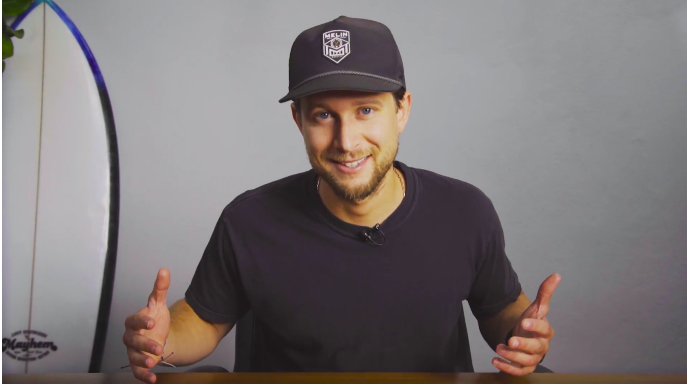
To understand how convincing these advertisements can be, it helps to see the technology firsthand. The video below shows my original video beside a recreation made with an AI avatar. The avatar delivers my exact script, using my own copy, in a format built to look like a real person speaking from real experience.
This was not a rough imitation. In my view, it shows a level of AI and deepfake capability that allows a single original video to be cloned, re-voiced, and redeployed across brands quickly, without the original creator's involvement or compensation. Most consumers scrolling past an advertisement like this would have no reason to suspect that the person on screen does not exist.
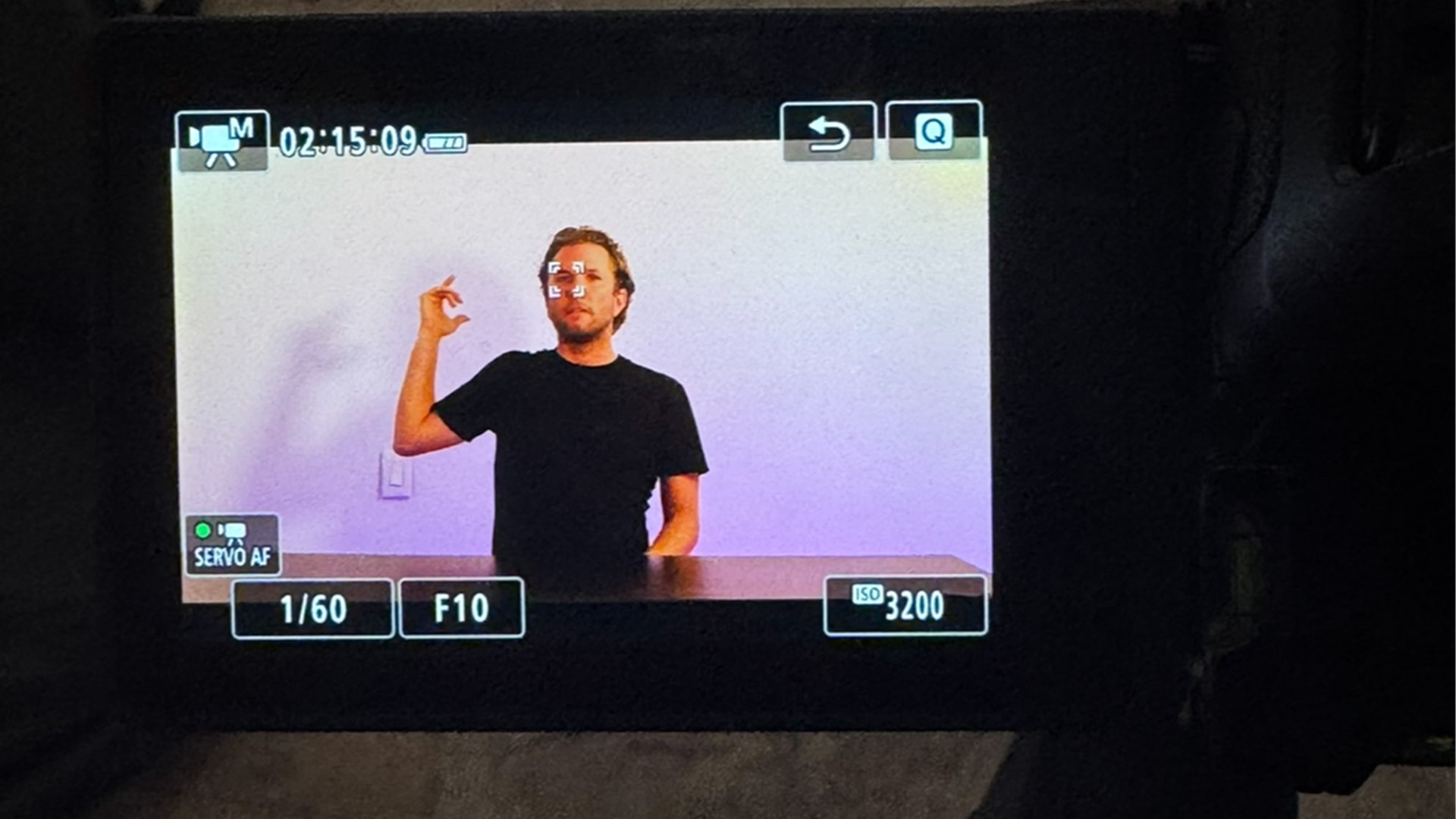
Ai Deepfake in Google Meet/ Zoom settings used for fraudulent inducement
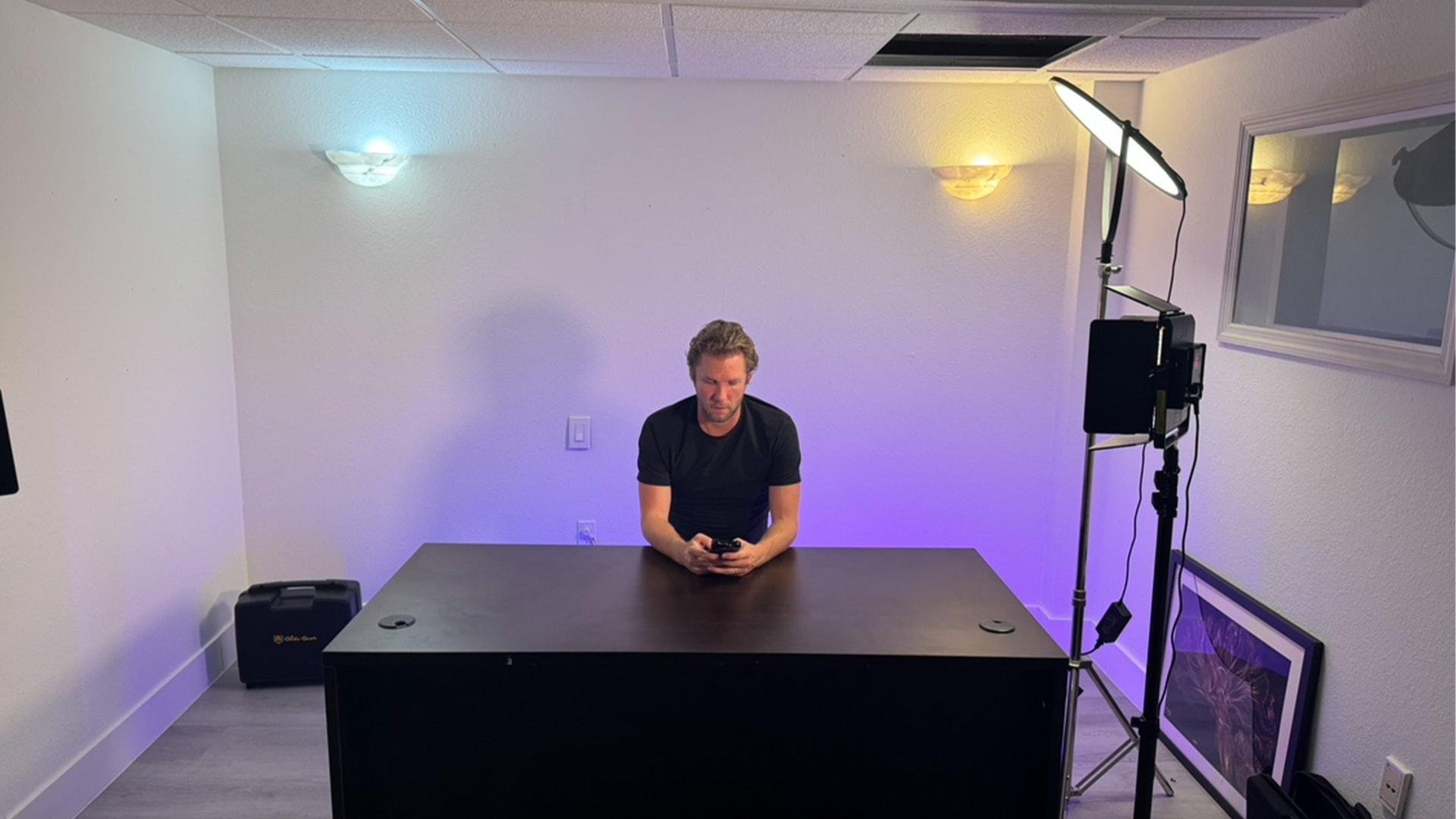
But their use of this technology was not limited to advertising. In my experience, they also deployed AI and deepfake technology on Google Meets and Zoom, which they did for nearly a year in an attempt to fraudulently induce me into transferring my priceless intellectual property. This is not only the ability to deceive consumers in an advertisement. It is the ability to put a believable face on a live video call.
Copying Products, Ideas, and Creative at Speed
The comparison below shows my original UNALIVED herbal protocol beside a Serene Herbs tincture serving the same purpose, with packaging that features elements I believe resemble my original designs. I allege this is one of many times they copied my products and ideas and used them to scale other brands while avoiding compensating me.
From what I observed, this is how the operation works: when a product, idea, or ad starts performing, it is duplicated quickly and without hesitation, then pushed out under other brands. This is my personal experience, but it was not unique to me. I witnessed the same thing happen to others repeatedly. Taking other people's ads and B-roll footage was, in my experience, standard operating procedure when working with them.
Both bottles are shown exactly as supplied, unmodified, so readers can compare the packaging themselves.

My Original UNALIVED Design
Serene Herbs Product
Section 03The Advertising Operations and the People Involved
My investigation focuses on Jacob Canfield, Brandon Fink, Wired2Scale, BNGR.io, BKFenterprises, WKND Digital and associated businesses. The scale of the infrastructure behind them matters: Brandon Fink has publicly stated that his network expects to spend approximately $4 billion on advertising over the next year. That figure is a projection, not verified spending, and it is not evidence of fraud on its own. But it provides critical context for the size of the operation examined in this report.
Why the Scale Matters
A publicly stated ambition to spend $4 billion on advertising raises important questions about the safeguards surrounding these operations.
During my involvement with advertising operations associated with Brandon Fink, Jacob Canfield, and Wired2Scale, I witnessed practices that I believe warrant scrutiny beyond any individual brand.
One example involved the use of my Facebook account and advertising identity through whitelisting arrangements to develop and reach audiences of Black consumers.
My concern is not that Black consumers were targeted with advertisements. Demographic marketing is not inherently unlawful.
My concern is how these audiences were developed and subsequently marketed to, particularly when viewed alongside evidence of synthetic medical endorsements, potentially misleading product claims, and consumer complaints involving brands associated with the same advertising operations.
The potential scale matters because advertising systems capable of reaching millions of people can also amplify deceptive representations when appropriate safeguards are absent.
The $4 billion figure is an attributed projection, not independently verified expenditure or proof of unlawful conduct.
The concern is not simply how much money these advertising operations could spend. It is whether consumers can trust the identities, medical endorsements, product claims, and purchasing experiences presented to them. At sufficient scale, misleading advertising practices can affect large numbers of consumers before individual complaints reveal a broader pattern.
The Question of Company Involvement
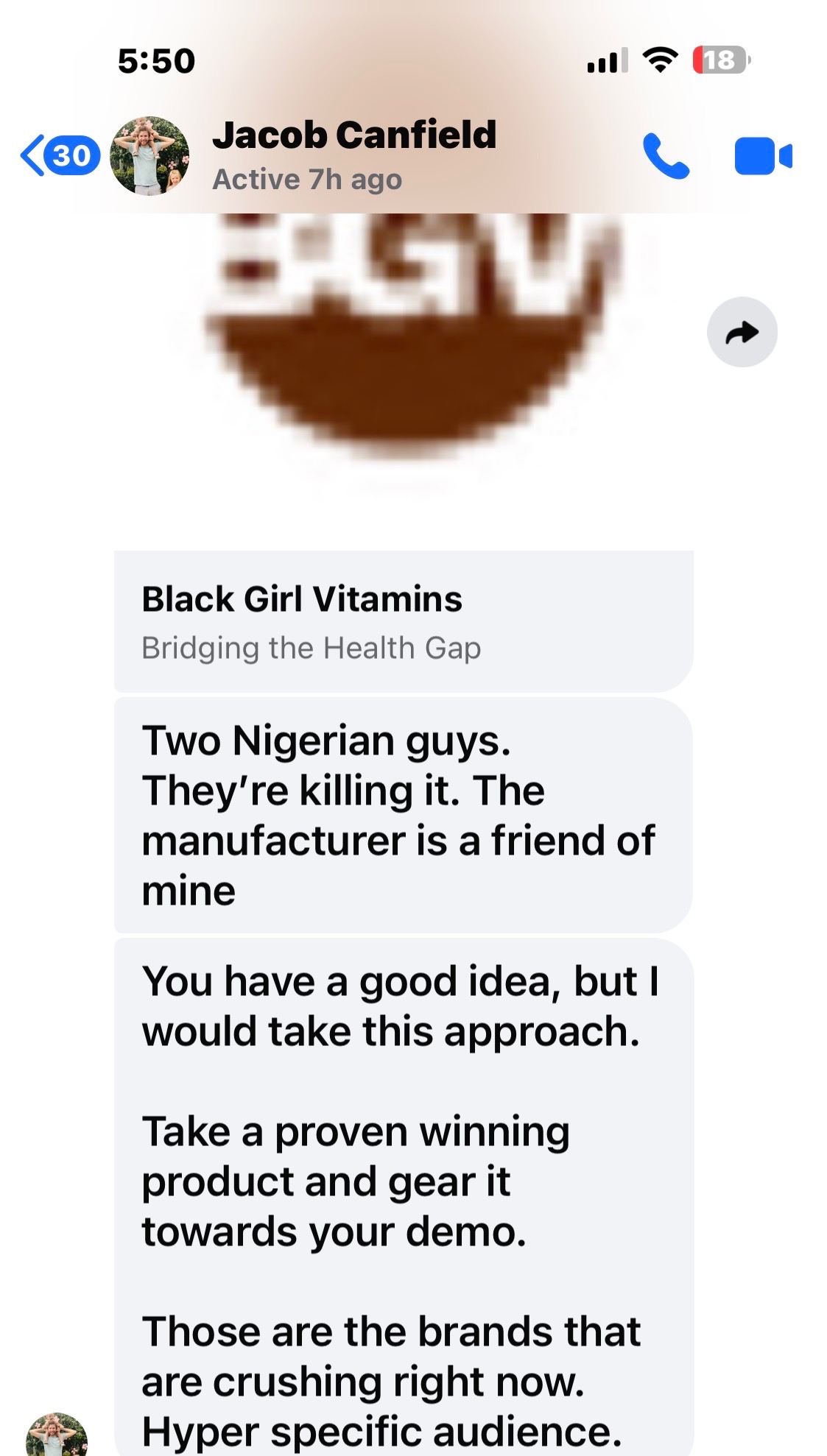
Throughout my work, I personally observed Brandon Fink and Jacob Canfield's involvement in advertising strategy, landing-page development, funnels and website operations. I cannot establish whether the individual client companies knew about, approved or participated in potentially improper arrangements. That distinction matters, and I want it to stay clear: none of this claims that criminal misappropriation, intentional policy circumvention or company complicity has been proven. Those are the questions I believe investigators should examine, starting with the advertising expenditures, payment processors, revenue beneficiaries and relationships between the companies involved.
Documented History
Jacob Canfield's public history predates e-commerce. A doctor and Army veteran, Canfield became one of crypto's most recognizable analysts, reaching the #1 ranking on TradingView and appearing in outlets including Forbes.

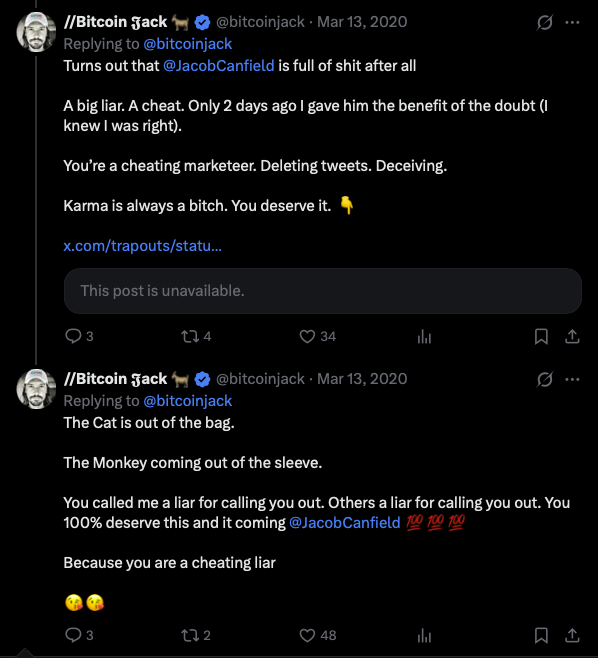
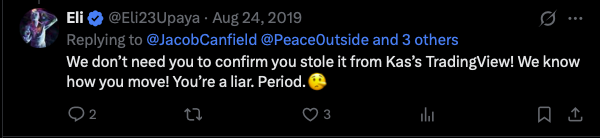
Then came 2020. Canfield faced public scrutiny over altered trading screenshots and controversy surrounding his crypto community. His once-prominent public presence faded. Years later, he resurfaced in a very different industry, this time as the operator of a rapidly growing performance marketing network producing advertising at massive scale.
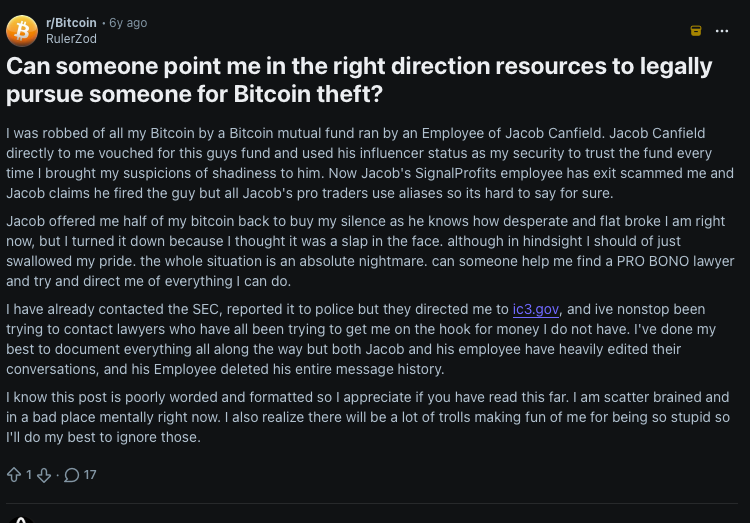
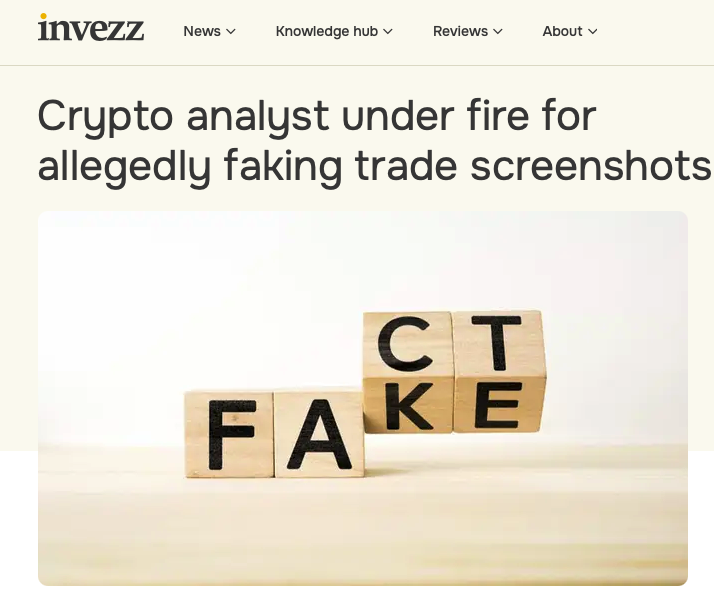
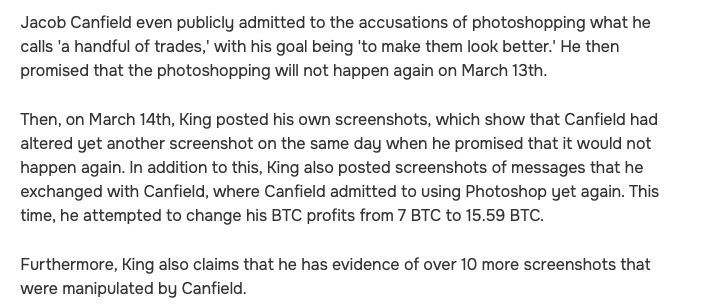
These public posts from 2019 and 2020 show the scrutiny Jacob Canfield faced online that I believe parallels aspects of what I am alleging. They contain other people's allegations and opinions, not independently established findings.

WKND Digital and Prior Records
In 2021, SkyLab Ventures and Welling Media sued WKND Digital and Chandler Welling, alleging misappropriation of trade secrets, clients, employees and other business assets.
Brandon's business history also predates my involvement with him. WFMY News 2 previously reported on complaints from two elderly women concerning HVAC work associated with Fink, including allegations of defective installations and unlicensed contracting. One customer told the station that Fink acted as a "friend" but warned her about the risk of carbon monoxide poisoning while recommending additional work. Public records also document a permanent injunction arising from prior contracting conduct.
Section 04The Ecom List: Brands and Supporting Evidence
These are the brands, businesses and consumer complaints I documented inside and around the advertising accounts I examined. A business appearing here is not an accusation; it is a record of what I saw, and each relationship has to be evaluated on its own. Several brands connected to these operations have reached the country's biggest retailers or carry well-known faces:
- ARMRA: reported more than 7,600 retail locations, including Walmart, Whole Foods Market, Sprouts and The Vitamin Shoppe.
- BRĒZ: stocked in Target stores across the U.S.
- Magna: sold at Target.
- Black Girl Vitamins: listed on Walmart.com through Walmart Marketplace. I have not confirmed physical-store distribution.
- Ultra Pouches: promotional endorsements featuring Nate Diaz and Rampage Jackson.
To be clear: I am not suggesting that any retailer or celebrity participated in, or knew about, the wrongdoing I allege. I include them to show how far these brands reach into everyday American shopping.
Wired2Scale Ad Account, a.k.a. #TheEcomList
- I AM GIA
- Tiger Mist
- ARMRA
- BRĒZ
- The Calming Co.
- Insane Labz / Innovative Partners, LP
- Gains In Bulk
- Black Girl Vitamins / Maxwell Nutrition LLC / BG Health
- One-Sol
- Anson Belt & Buckle
- Auri / EJEC Ventures LLC
- Serene Herbs
- Deos / “Deos D.” (DEOSS)
- Podium 1 Racing
- Evident Wellness
- AKKA / TryAKKA
- Magna / People Brand Company LLC
- Feel Goods
- The Canine Standard
- Ultra Pouches
- Blyss
- Enhanced Performance Products / Enhanced Telehealth / Enhanced Supplements
- Sisters Nutrition, “The #1 PCOS Supplement”
- Hyro / drinkhyro
- absorb.more
- Booty King en Español
- The Loaded Tea Shop
- Graymatter Labs
- Biologica
- Jupi Nutrition / Jupi
- Mutzel Nutrition LLC
- Groomie / ReVamp Electronics LLC
- Air Titans / Air Titans Pro LLC / Air Titans – Tampa / Air Titans – Indoor Air Experts
- Florida's Best Services
- DMV Home Services
- Orlando Christmas Lighting
- Jacksonville Christmas Lighting
- Xmas Lights
- Purple Nurse
- Purple 1
- Wired2Scale
- Marketing Titans
- Mafia Marketing
I have no reason to believe these brands represent the full extent of the businesses connected to, operated by, serviced by, or financially benefiting the individuals examined in this investigation.
To be explicitly clear: I am not alleging that every brand identified here knowingly participated in, supported, or was even aware of the broader deceptive practices examined in this investigation. Some of these businesses may themselves be customers, contractors, partners, or other parties that were unaware of the conduct occurring around them and may have been harmed or misled themselves. A company’s appearance in an advertising account, communication, platform, payment record, or other material I preserved does not, by itself, establish wrongdoing by that company, its owners, employees, or investors.
Potential Sources of Records for Investigators
I am formally and publicly identifying the following platforms and financial services as potential sources of records relevant to Brandon Fink, Jacob Canfield, Preston Cody Wood, and their associated businesses. Should law enforcement or a government agency open an investigation, I believe potentially relevant records may exist across the services listed below. Where legally appropriate, investigators may want to consider preservation requests, subpoenas, or other lawful measures to prevent relevant records from being altered or lost.
- Twilio
- Synctrack
- Lovable
- Wired2Scale Meta advertising accounts (plus his wife's and employees' Meta accounts)
- BNGR Meta advertising accounts (plus his wife's Meta accounts)
- Motion
- Repeat
- GoHighLevel, including agency and associated company accounts
- Arcads.ai
- Air.inc
- ElevenLabs
- OpenAI
- Anthropic / Claude
- Perspective
- Triple Whale
- Northbeam
- Discord
- Telegram
- PayPal
- Mercury, including the Marketing Titans account
- Bank of America, including two checking accounts and one lending account
- Google Workspace administrator accounts
- Cloudflare
- Stripe
- Gusto
- Notion
- BILL
- Possible private processing & cryptocurrency accounts
- Perplexity.ai
I am publishing this list as an investigative lead based on records and information I have preserved. The listed platforms are not being accused of or complicit in any unlawful activity deployed by Brandon, Jacob or people in their network.
Section 05What the Evidence Shows
Stepping back, the evidence in this report points to a small number of patterns. Consumer complaints cluster around unauthorized recurring billing, non-delivery, refund difficulties and adverse health reactions across multiple brands inside the same advertising account. The funnels I observed route consumers toward products or offers different from the ones advertised, using AI-generated medical professionals and synthetic testimonials to manufacture authority. Original creative is repeatedly reused as reference material for AI derivatives that then compete for the same advertising spend. And the same small group of operators, businesses and agencies recurs across brands, ad accounts and business relationships.
Some of this is established by my firsthand records and public documents: the ad-account exhibits, the funnel recordings, the consumer reviews, the WKND Digital lawsuit, the Black Girl Vitamins consent judgment, the public reporting on Fink's HVAC work, and Canfield's crypto history. Other parts remain open questions: whether any death was caused by a product, whether the ad-spend redirection was authorized or intentional, who controls the synthetic identities and fabricated companies, and how far the network extends. Those questions are why I am publishing this record, and why I believe regulators and investigators should look closer.
I believe what I uncovered is only the surface. Evidence points to dozens, potentially hundreds, of AI-generated shell companies using deepfake identities, synthetic businesses and deceptive marketing funnels to manufacture trust, conceal the real operators and facilitate fraudulent inducement and consumer deception while avoiding detection and accountability.
The complete list of my allegations
Jacob Canfield, Brandon Fink and Preston Cody Wood presented themselves to me as friends, mentors and business partners. Over roughly two years of working directly with people and businesses connected to them, I allege that they:
- Hid recurring subscriptions and rebills from consumers using alternative landing pages, deceptive checkout flows and other funnel structures that obscured material billing terms.
- Duplicated transactions, processed unauthorized recurring charges and used deceptive billing practices that caused consumers to be charged for purchases or subscriptions they did not knowingly authorize.
- Collected consumers’ credit-card and payment information through deceptive funnels, then used that information to process recurring, duplicate or otherwise unauthorized transactions.
- Built and scaled deceptive AI-generated advertising using fake doctors, fake nurses, synthetic customers, fabricated testimonials, manufactured social proof and AI-generated authority figures presented to consumers as real people or genuine experiences.
- Used AI to mass-produce advertisements, identities, testimonials, endorsements and marketing funnels, creating a deceptive marketing flywheel capable of reproducing the same tactics across brands, products and markets while concealing the identities and involvement of the people operating the system.
- Jacob used AI and deepfake technology to construct fabricated business ecosystems, including fake venture-capital companies, synthetic founders and employees, Slack workspaces, social-media accounts and LinkedIn profiles. These fabricated identities were reinforced through SEO and manufactured digital footprints designed to make the people and companies appear legitimate. I personally witnessed Jacob deploy this infrastructure inside an account.
- Used synthetic employees and AI-generated identities as supposed third parties and introduced them to brands while Jacob and his team remained behind the identities. This allowed them to conceal their involvement, operate on multiple sides of business relationships, gain deeper access to companies and their internal operations, and potentially obtain confidential information and trade secrets while avoiding detection and accountability.
- Used fabricated identities, companies and business relationships as instruments of fraudulent inducement and financial deception, allowing the real operators to solicit business, money, information, intellectual property and access while concealing who was actually controlling the entities involved.
- Duplicated products, offers, branding and marketing systems belonging to companies within their advertising network and scaled similar or derivative offers into additional markets, including Australia, Spain and the United Kingdom.
- Manipulated attribution, advertising data, performance reporting and funnel structures to obscure where transactions originated, which advertisements generated sales, who controlled the customer relationship and who benefited from the resulting revenue.
- Took more than $7,000 of my money, including funds transferred by wire.
- Induced me into contracts, partnerships and extensive labor through false representations about compensation, ownership, performance, business backing and future opportunities. At times, I worked 16+ hour days while substantially underpaid or unpaid.
- Hid and misrepresented my performance data, interfered with work tied directly to my compensation and prevented me from accessing valuable portfolio information while continuing to profit from my creative assets, strategy and know-how.
- Used AI, deepfakes, synthetic identities and fabricated social proof to gain my trust and induce my cooperation, including false or misleading representations involving founders, influencers, company representatives, employees, brands and business relationships.
- Obtained and exploited my intellectual property, raw footage, systems, training, strategy, ideas and personal experiences after I explicitly refused to sell or provide certain assets and capabilities to them.
- Used my original content and personal experiences as source material for synthetic AI advertising, including AI personas built around experiences taken from my real-life weight-loss story, without my authorization or compensation and after I explicitly rejected contracts governing that work.
- Used promises of substantial money, resources, equity, networks and future opportunities to keep me building and supporting their businesses while compensation, ownership commitments and other promises repeatedly went unfulfilled.
- Brandon Fink and Jacob Canfield eliminated a co-founder’s equity interest, consolidated their ownership stakes under their HVAC company, and then pressured me to surrender an additional 9% of my equity without compensation. I was excluded from the restructuring discussions and maintain that these actions breached our founding agreement.
- I explicitly told them I would NOT build these systems for them, help them build them, or help them find someone else to build them after becoming concerned about how they intended to use them. I also refused to provide intellectual property and capabilities that I believed could facilitate deceptive or unlawful activity.
- After those refusals, substantially similar ideas, systems, services and creative methods were replicated and scaled using AI without my participation or consent.
- When disputes arose, they repeatedly pushed conversations away from written communication and toward calls or video meetings, including requests to disable automated meeting transcription, followed later by confidentiality and NDA demands.
- Used bot farms (fake accounts) to sway public opinion in the comment sections when their products faced public scrutiny.
These are not allegations about AI advertising simply being new, aggressive or unconventional. I allege that AI became infrastructure for a broader system of deception: hiding billing practices, manufacturing identities and social proof, automating deceptive advertising, manipulating attribution, exploiting intellectual property and distancing the people operating the system from what consumers, creators and business partners were actually being shown.
If you believe you have experienced deceptive advertising, unauthorized charges, or other potentially fraudulent practices involving WIRED2SCALE or associated brands, you may file a report with the FTC. Provide truthful information based on your own experiences or available evidence. Filing a report does not guarantee an investigation.
Section 06Consumer Protection and Reporting
If you shop online, subscribe to supplements, or buy from advertisements on social platforms, a few habits will reduce your risk:
- Question who is selling. Verify the business behind the advertisement: its name, address, return policy and reviews. Be skeptical of endorsements from people who may not exist, including polished videos of medical professionals or customers you cannot verify.
- Check the checkout. Look for pre-checked subscription boxes, unclear billing terms, and offers that differ from the advertisement that brought you there. If the product or price changes between the ad and the checkout, stop.
- Review your statements monthly. Look for recurring charges you did not knowingly authorize. Unauthorized subscriptions often hide behind small monthly amounts.
- Preserve everything. Keep screenshots of the advertisement, the landing page and the checkout, along with order confirmations, receipts and bank or card records. If you are a creator or business owner who hired an agency, preserve contracts and determine where the creative came from, who owns it, whether the people appearing in it are real, and whether the agency actually has the rights to provide it.
- Dispute unauthorized charges. Contact your bank or card issuer promptly and ask about your dispute and chargeback rights. Cancel any subscription you did not knowingly create, in writing, and keep the confirmation.
- Report it. Report suspected deceptive practices to the FTC at reportfraud.ftc.gov, your state Attorney General, the FDA for supplement safety concerns, and the FBI at ic3.gov. If you are outside the United States, contact the appropriate regulator in your country.
If you purchased from, invested in, contracted with, performed affiliate work for, or provided creative or performance marketing services to any of the agencies or brands discussed, and believe you experienced fraud, deception, unauthorized charges, withheld compensation, or other misconduct, I encourage you to preserve your records and report your experience to the appropriate regulator. If you have firsthand evidence - consumer complaints, advertisements, receipts, recordings - I want to hear from you. If these agencies introduced you to or referred you to a creative strategist or employee, I suggest you audit them.
If you believe you have experienced deceptive advertising, unauthorized charges, or other potentially fraudulent practices involving WIRED2SCALE or associated brands, you may file a report with the FTC. Provide truthful information based on your own experiences or available evidence. Filing a report does not guarantee an investigation.
My objective is accountability, not guilt by association. Consumers, creators, employees, investors and legitimate businesses all deserve to know when their trust may have been exploited. The complaints documented in this report, the advertising practices behind them, and the relationships among the businesses involved warrant independent examination by regulators, journalists and investigators.
I want the truth on the record.
Take Action: Report Suspected Consumer Fraud
Have you experienced misleading advertisements, unauthorized transactions, deceptive subscriptions, products that never arrived, or other potentially fraudulent practices involving businesses discussed in this investigation?
The Federal Trade Commission accepts consumer fraud reports. Your report may help authorities identify patterns of consumer harm.
Official U.S. Government Reporting Portal. Free to Submit.
If you believe you have experienced deceptive advertising, unauthorized charges, or other potentially fraudulent practices involving WIRED2SCALE or associated brands, you may file a report with the FTC. Provide truthful information based on your own experiences or available evidence. Filing a report does not guarantee an investigation.